
John Hakker.

Photographer unknown, Sea Spray Collection, New Zealand Maritime Museum Hui Te Ananui a Tangaroa

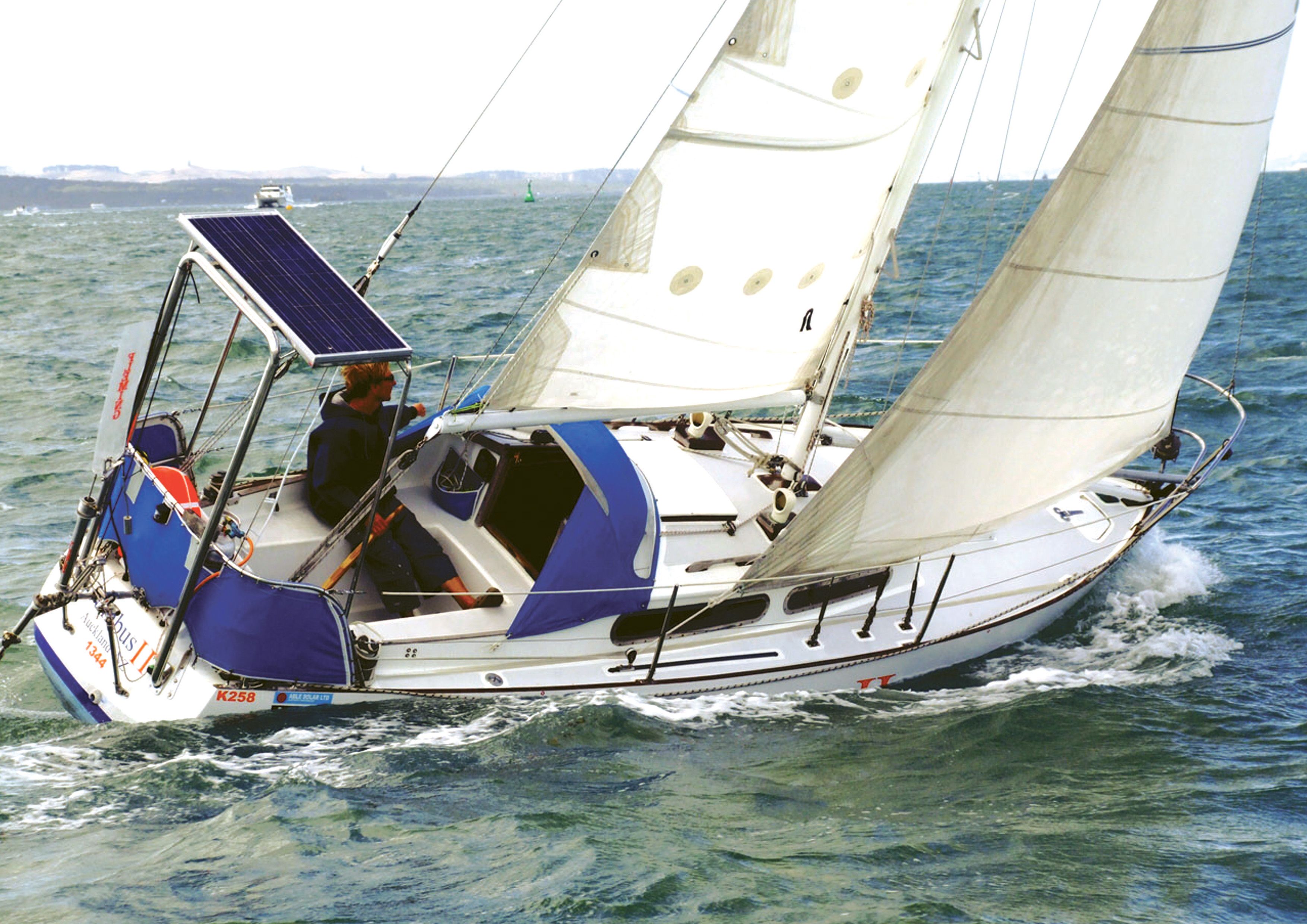
Nimbus II was designed by John Hakker and built by Alan Hooper in 1970. This 23-foot (7.01m) crewcut masthead sloop was constructed of three-skin kauri, which was then glassed.

Photograph by and courtesy of Richard Raea

JOHN HAKKER

(1932–2005)

John Hakker was an extraordinarily versatile naval architect who designed a wide range of craft – from fishing vessels to pleasure yachts – in New Zealand and Europe.


Dams and yachts

John Hakker was born in the Netherlands. He studied naval architecture and then went to work in a small shipbuilding yard. After a year there, he went travelling, ending up in New Zealand in 1952.

Hakker initially worked as a designer-draughtsman for a civil engineer, before going to the Ministry of Works as a draughtsman and engineer on the huge Benmore Dam on the Waitaki River power project.

Yacht designing was a hobby at this point. Hakker found that he could transfer skills he developed at the Ministry – for example, in laminated-timber construction – to boatbuilding.

JOHN HAKKER

A versatile practice

Hakker then became co-owner of a Central Otago sheep and cattle farm, which he farmed with his wife Lexie for the next 37 years. He also started his own business as a consultant naval architect – Hakker Marine Design.

Between 1965 and 1970 he designed tugs, fishing vessels, small passenger vessels, launches, fast planing craft, barges and yachts. His designs covered steel, timber, fibreglass and ferro-cement. He was instrumental in establishing the use of steel construction in the New Zealand fishing fleet.

Of his yachts, his most popular design was the 23-foot (7.01m) Junior Offshore Group (JOG). He also designed the all-steel keelboat Centaur 24, a safe and affordable family cruiser.

Made of steel

Like his contemporary Denis Ganley, Hakker believed that ‘steel is an excellent medium in which to build … cheap and offering a strength factor which more than offsets any disadvantage in weight’.

From 1982, Hakker and his wife lived for half of every year on their yacht in Holland. But during his time in New Zealand, and until the end of his life, he kept on designing what he loved most – things which floated.