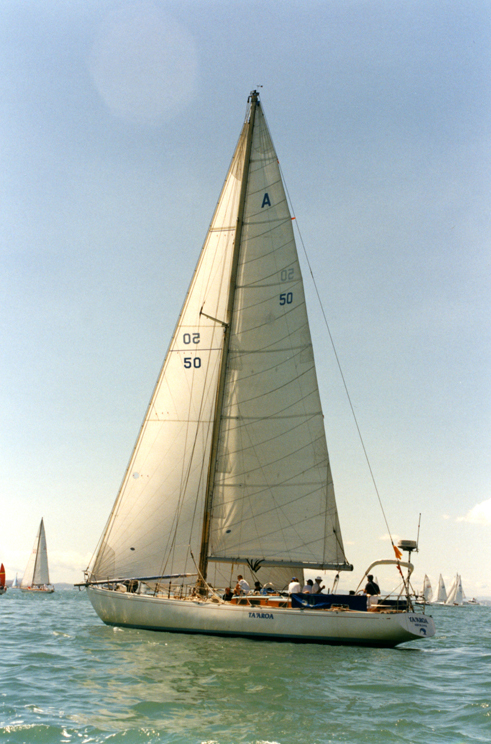
Ta'aroa in the Auckland Anniversary Regatta, 1996. Max Carter built the 60-foot (18.2m) racer for Doug Bremner to a Sparkman and Stephens design in 1966.

Ta'aroa and portrait images: Photographers unknown, New Zealand Maritime Museum Hui Te Ananui a Tangaroa

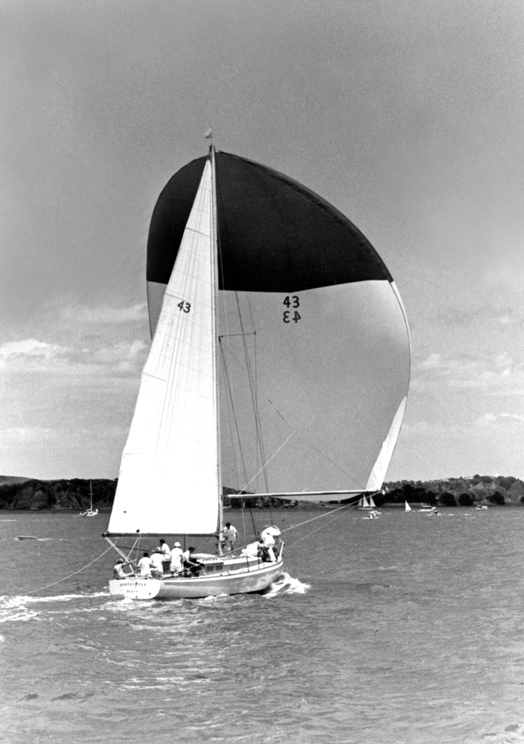
Northerner, a keelboat built by Max Carter to a Bob Stewart design.

Photographer unknown, Sea Spray Collection, New Zealand Maritime Museum Hui Te Ananui a Tangaroa

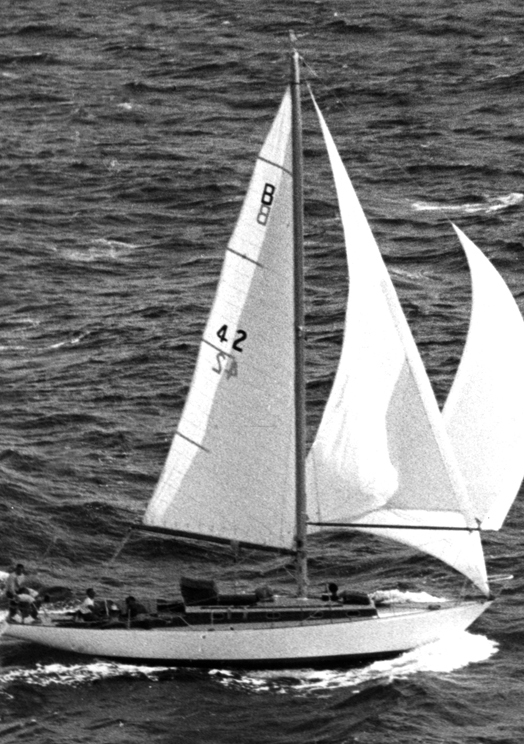
Cotton Blossom IV, a 39-foot (11.88m) yacht built by Max Carter to a Sparkman and Stephens design.

Photographer unknown, Sea Spray Collection, New Zealand Maritime Museum Hui Te Ananui a Tangaroa

MAX CARTER

(1932–2016)

Max Carter ran highly successful boatbuilding and spar-making businesses and was a notable boat designer and builder.


Seacraft lessons

Max Carter built canoes and sailing dinghies as a boy in Thames. At 16, he moved to Auckland to follow his passion, taking on a boatbuilding apprenticeship with Sandy Sands at Seacraft.

‘Sandy taught me how to work, and to think laterally,’ Carter said. ‘He also taught me boat design.’

Out of the mould

In 1955, after a stint with Lanes Motorboat Company, Carter went into partnership with Alan Wright. They built various small plywood centreboarders and runabouts and experimented with cold-moulding techniques.

In 1956, Wright moved on and Carter set up M C Carter Ltd, a company which became renowned for its skill with wood gluing and moulding.

MAX CARTER

Big move

By now Carter had bought his own premises and could build bigger vessels. His commissions included racers like the successful 35-foot (10.67m) Scimitar (1959), designed by John Spencer. He also built many Bob Stewart-designed yachts, such as Northerner (1963).

He later built the 65-foot (19.81m) luxury cruiser Du Fresne (1966), designed by renowned Englishman Laurent Giles.

Carter was chosen to build New Zealand’s mould for the Flying Dutchman Class at the 1960 Olympic Games. He built at least 10 of these boats, including the one that represented New Zealand. In its lifetime M C Carter also produced hundreds of other small locally designed centreboarders.

MAX CARTER

From hulls to spars

By the late 1960s, M C Carter was New Zealand’s biggest boatbuilder. But an economic downturn saw business fall off rapidly, and Carter closed the company.

In 1972, after a spell in Fiji running a ship repair company, Carter was hired to turn around a troubled spar-making business. This he transformed into the profitable and export award-winning Yachtspars.

From the 1980s he concentrated on his own design-and-build projects, particularly powerboats. He was also an expert on repairing and maintaining classic boats. He helped the New Zealand Maritime Museum Hui Te Ananui a Tangaroa to restore many of its own vessels, and designed and supervised the construction of the Museum’s scow, Ted Ashby, assisted by Nigel Armitage.