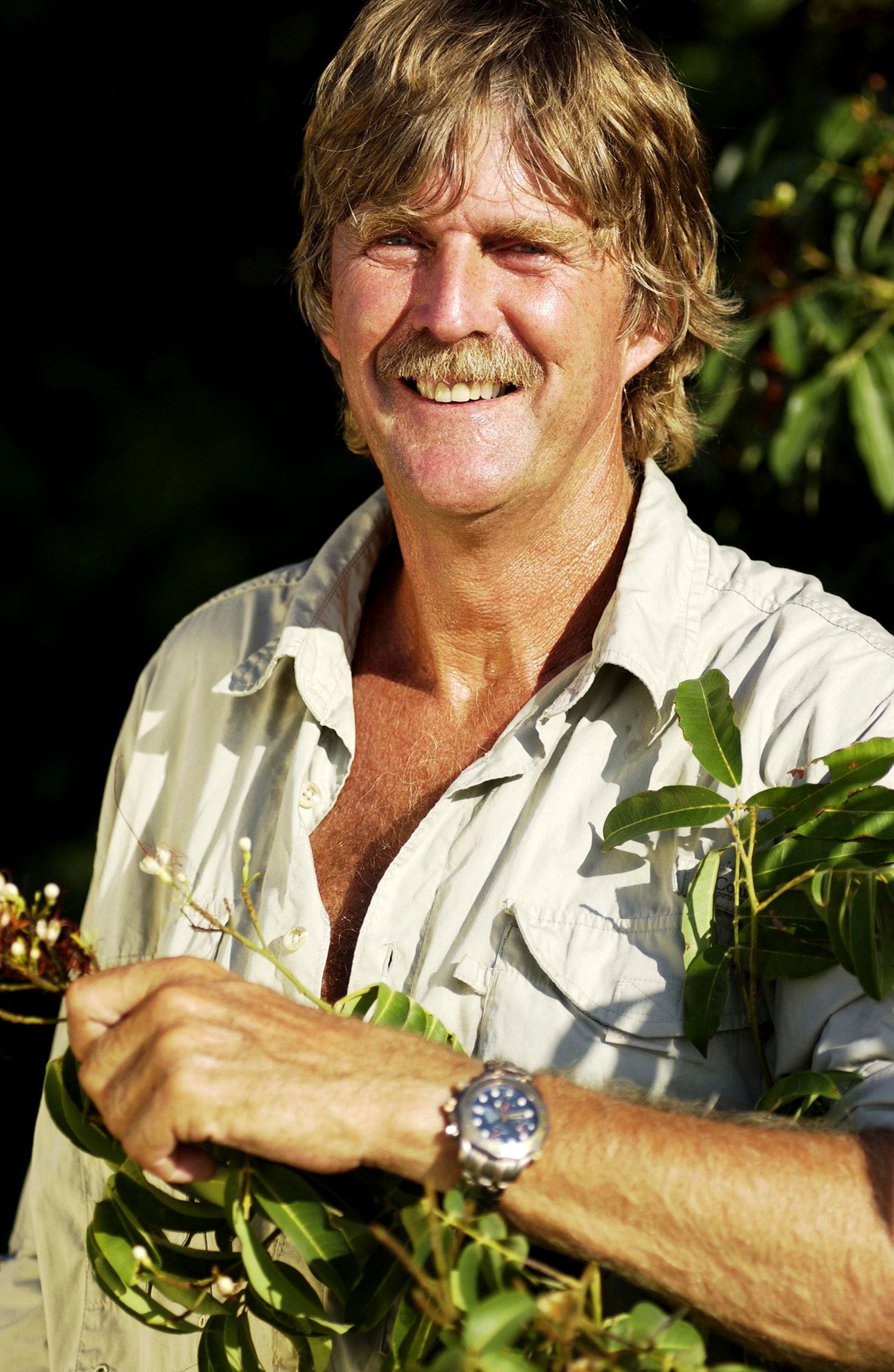
Sir Peter Blake, 15 November 2001.

Photograph by and courtesy of Franck Socha / www.francksocha.com

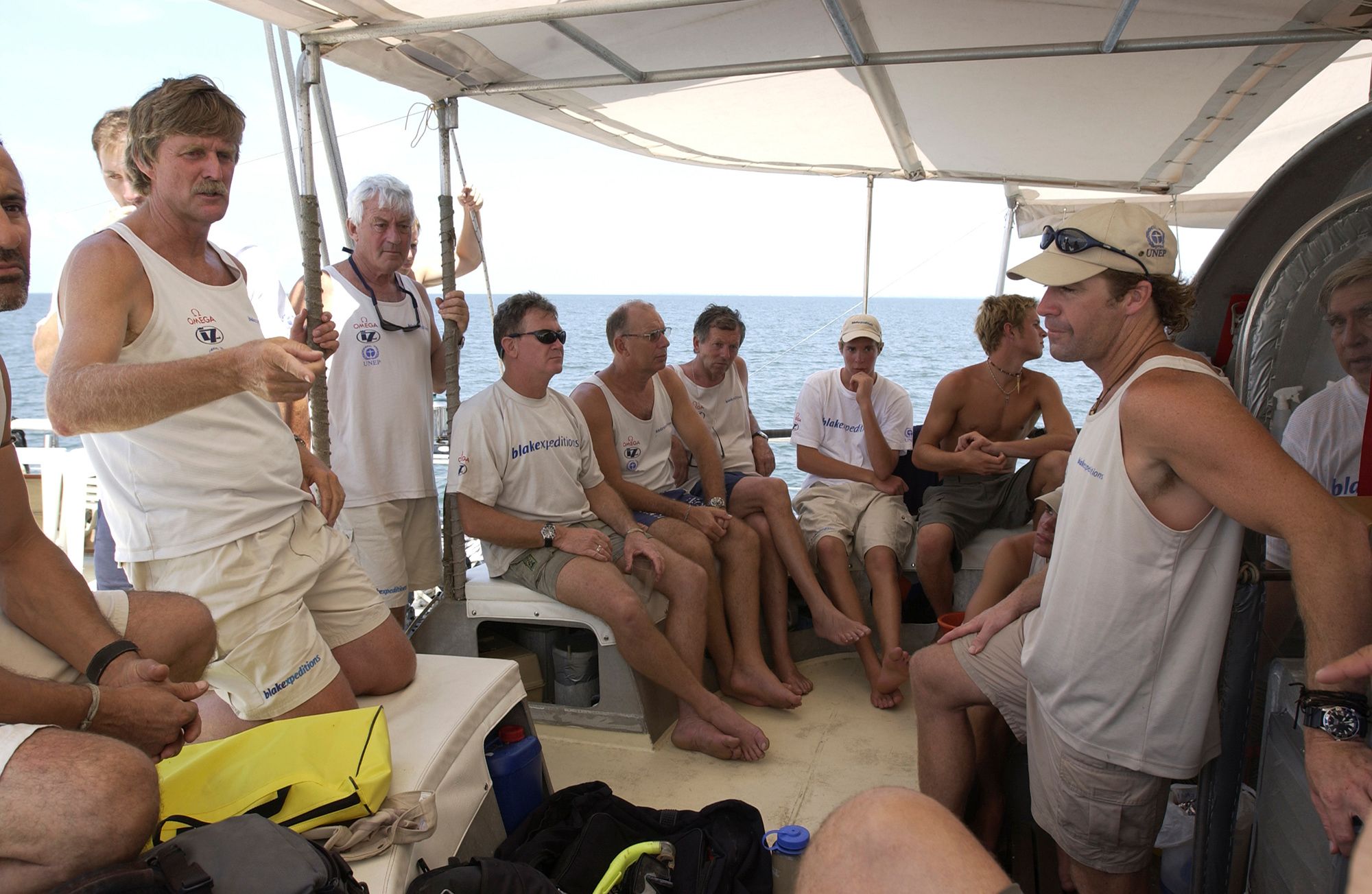
Marc Hertel gives a safety briefing before the team’s first dive. In the lagoon off the Rio Tapajos, they encountered a caiman, turtles, tropical fish and a school of black piranhas, but on this dive there was no sign of anacondas.

Photograph by and courtesy of Franck Socha / www.francksocha.com

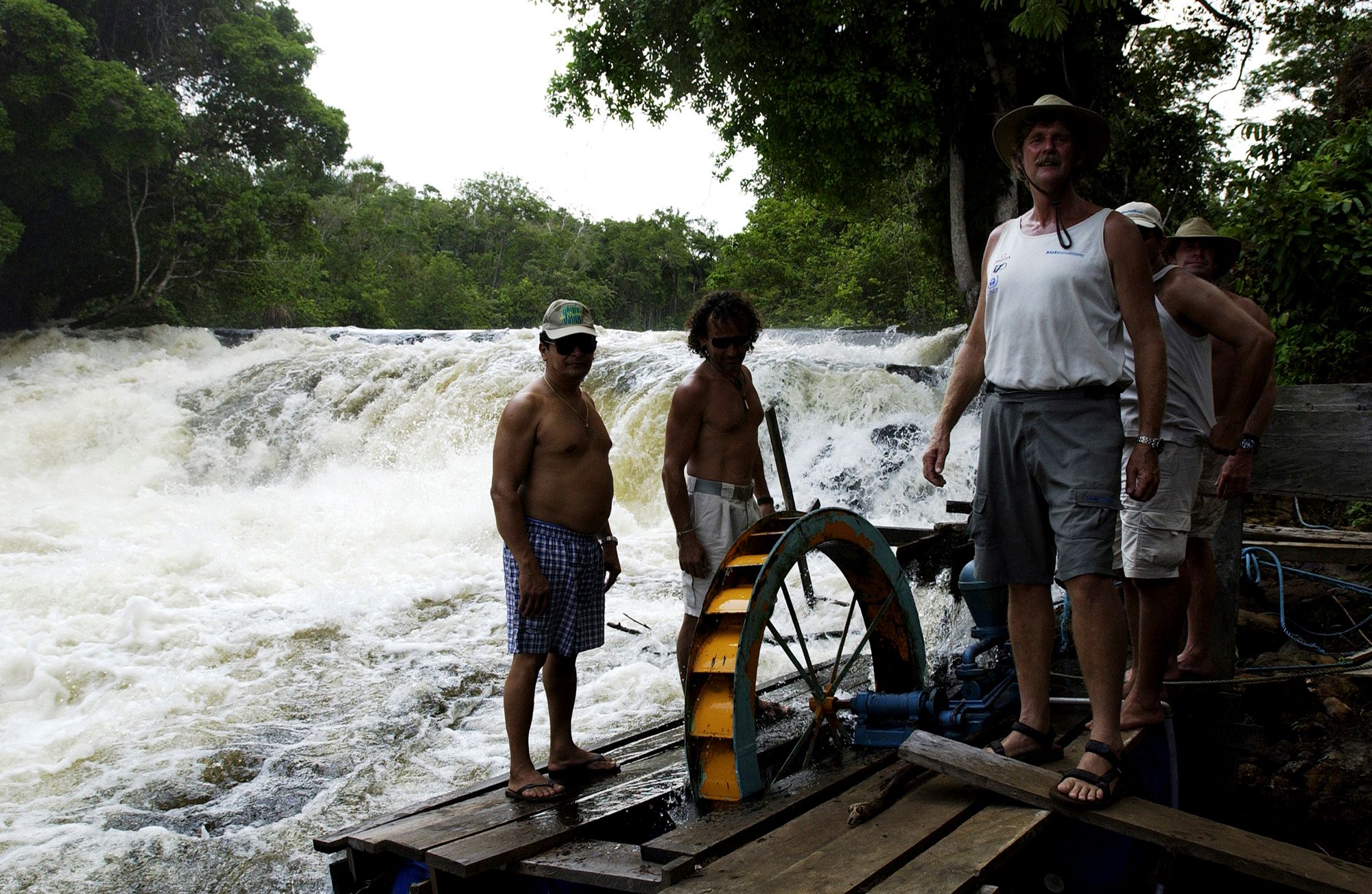
Looking at a water pump on the Rio Arua – a tributary of the Amazon.

Photograph by and courtesy of Franck Socha / www.francksocha.com

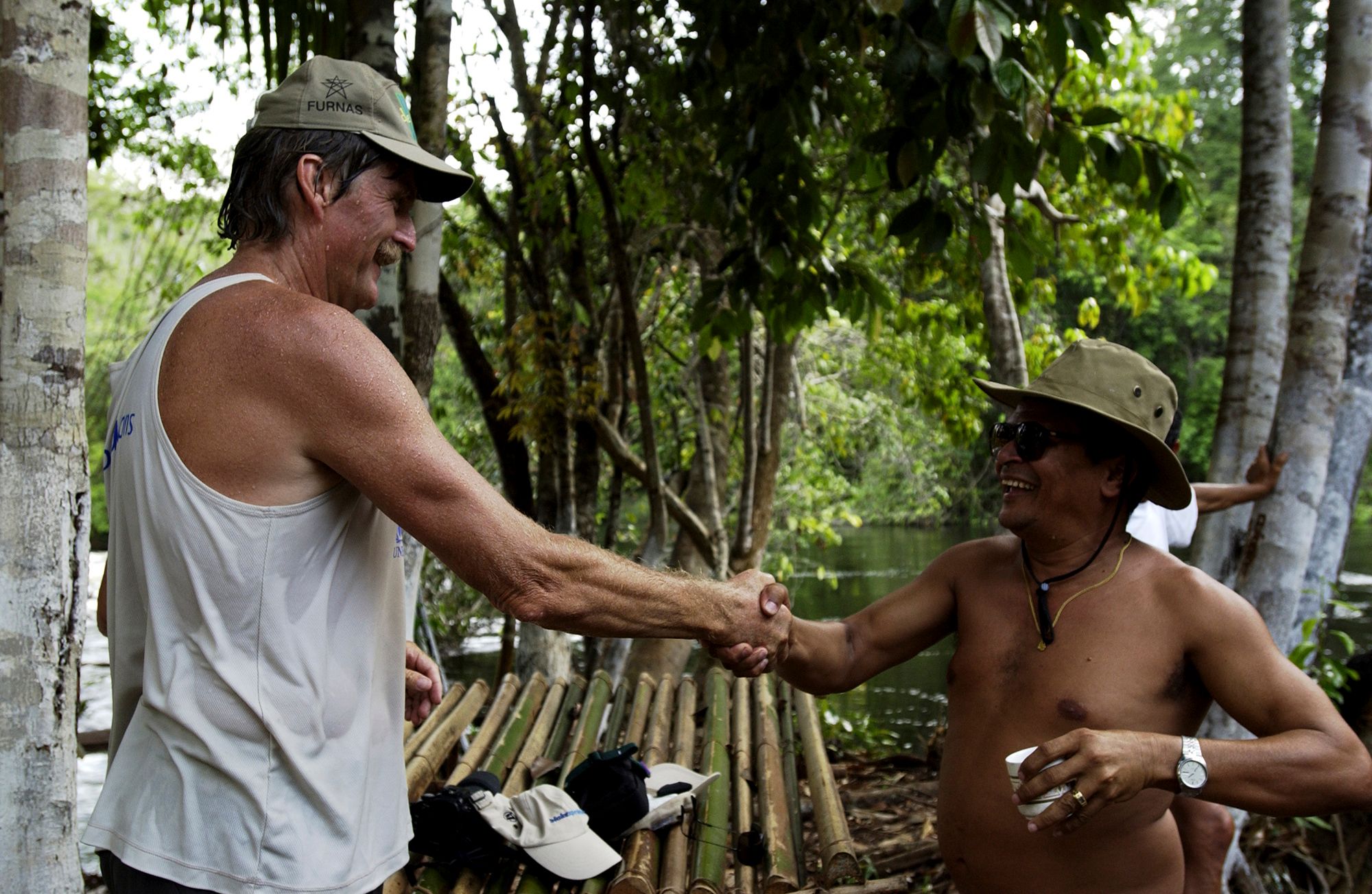
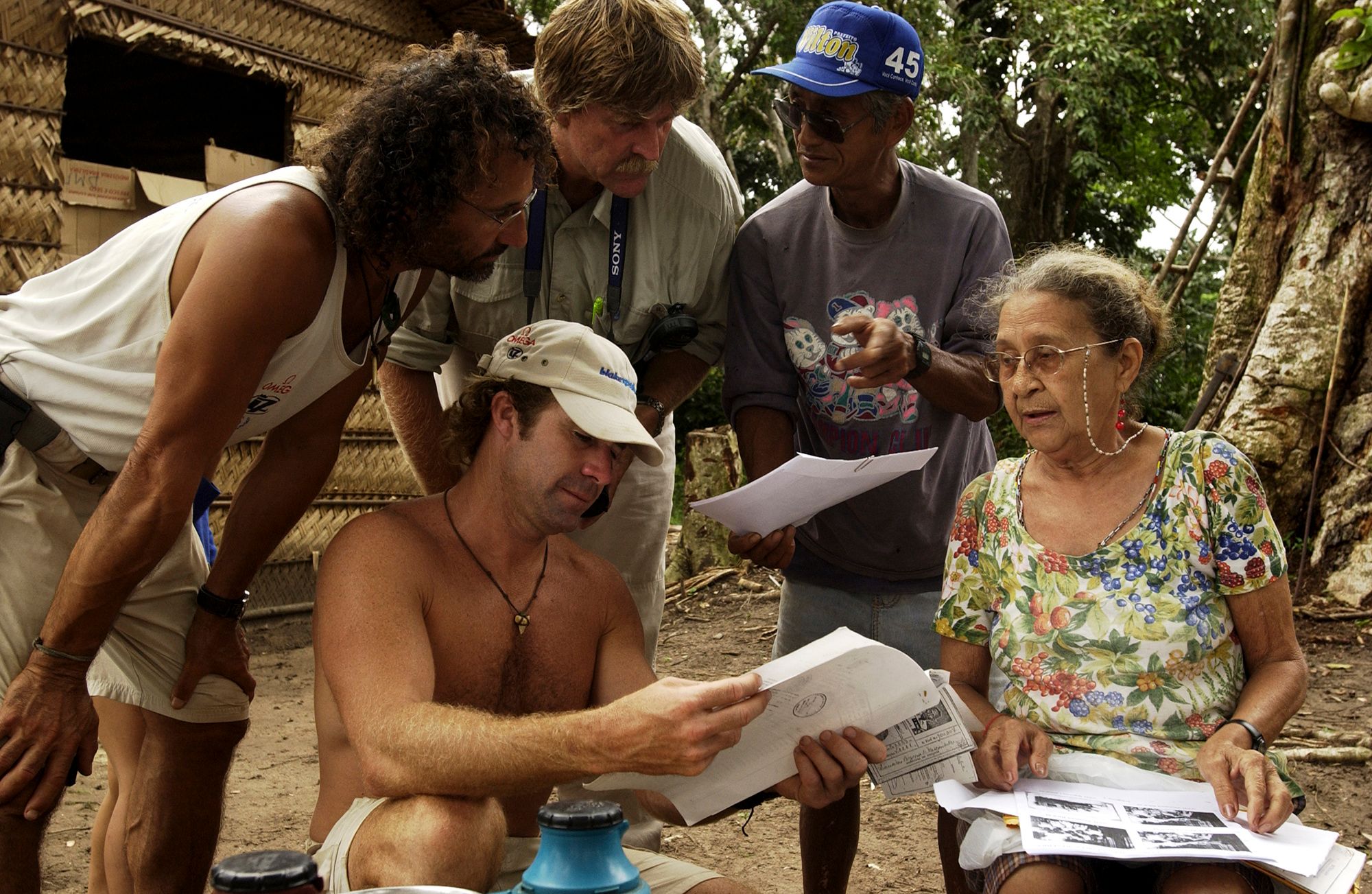
Meeting a local near the village of Arua.

Photograph by and courtesy of Franck Socha / www.francksocha.com

Getting to know the locals in the Arapiuns River region.

Photograph by and courtesy of Franck Socha / www.francksocha.com

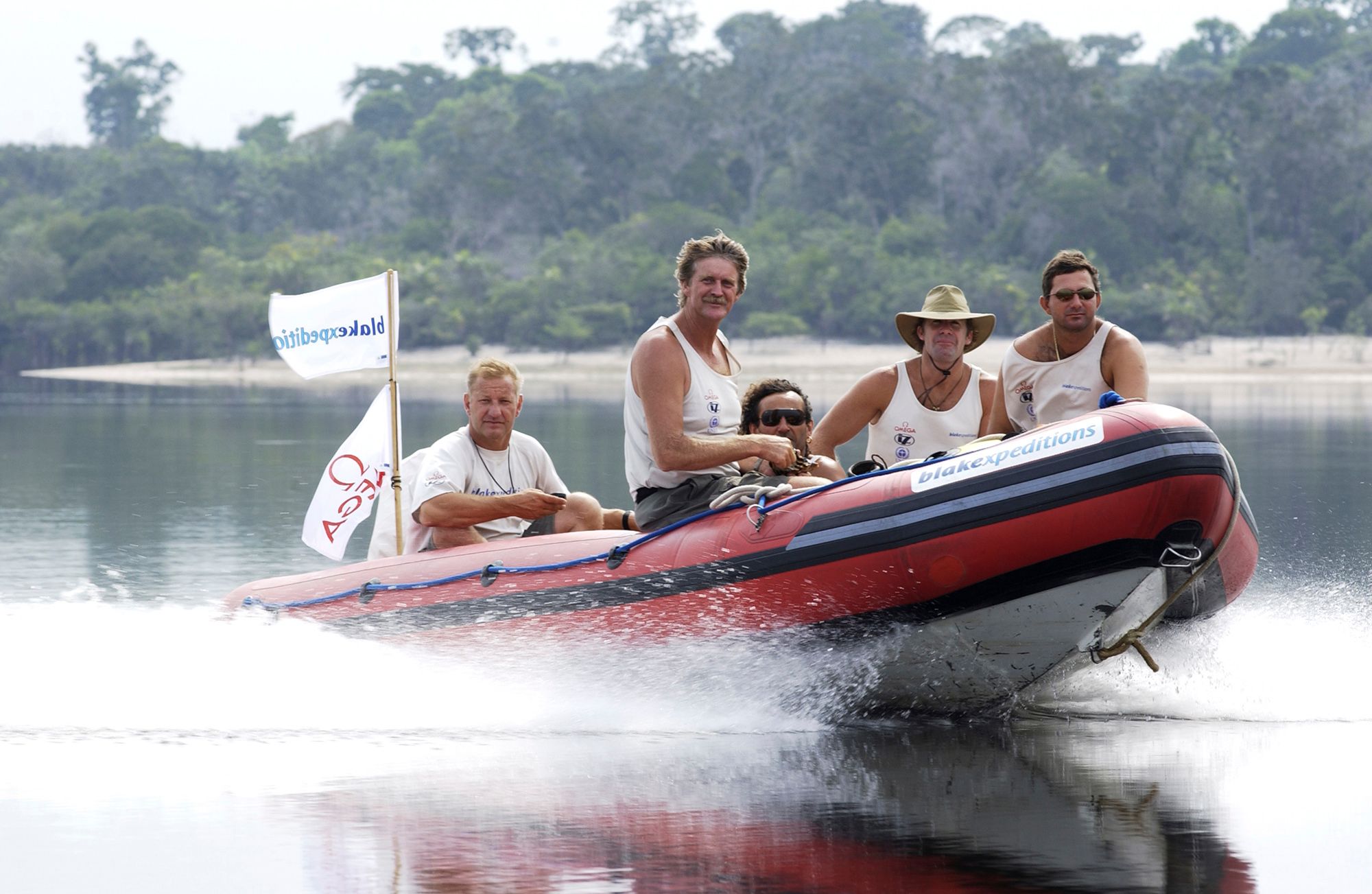
The rigid inflatable boat (RIB) was used to scout ahead of Seamaster to check river depths and for mudbanks and rocks.

Photograph by and courtesy of Franck Socha / www.francksocha.com

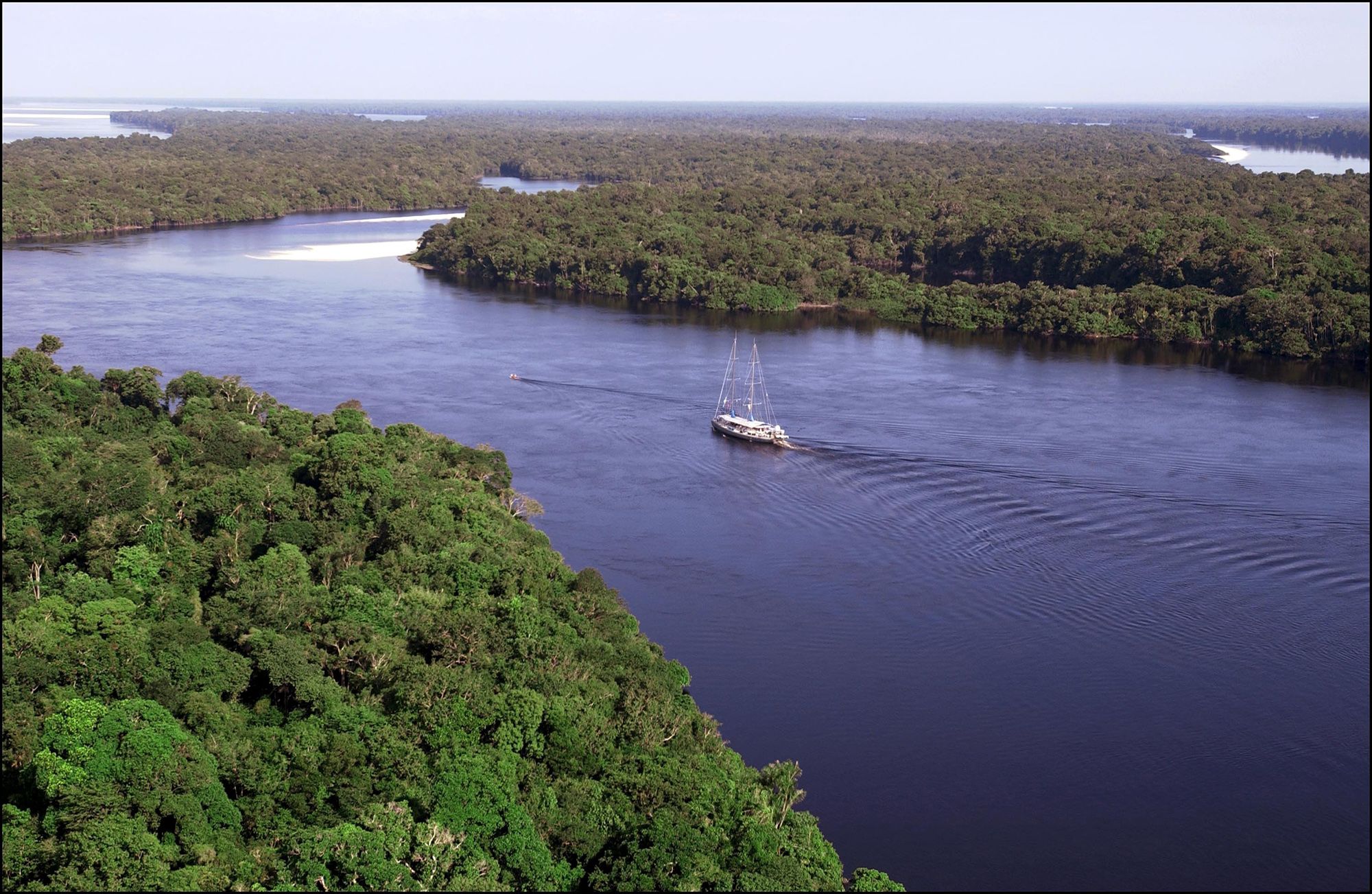
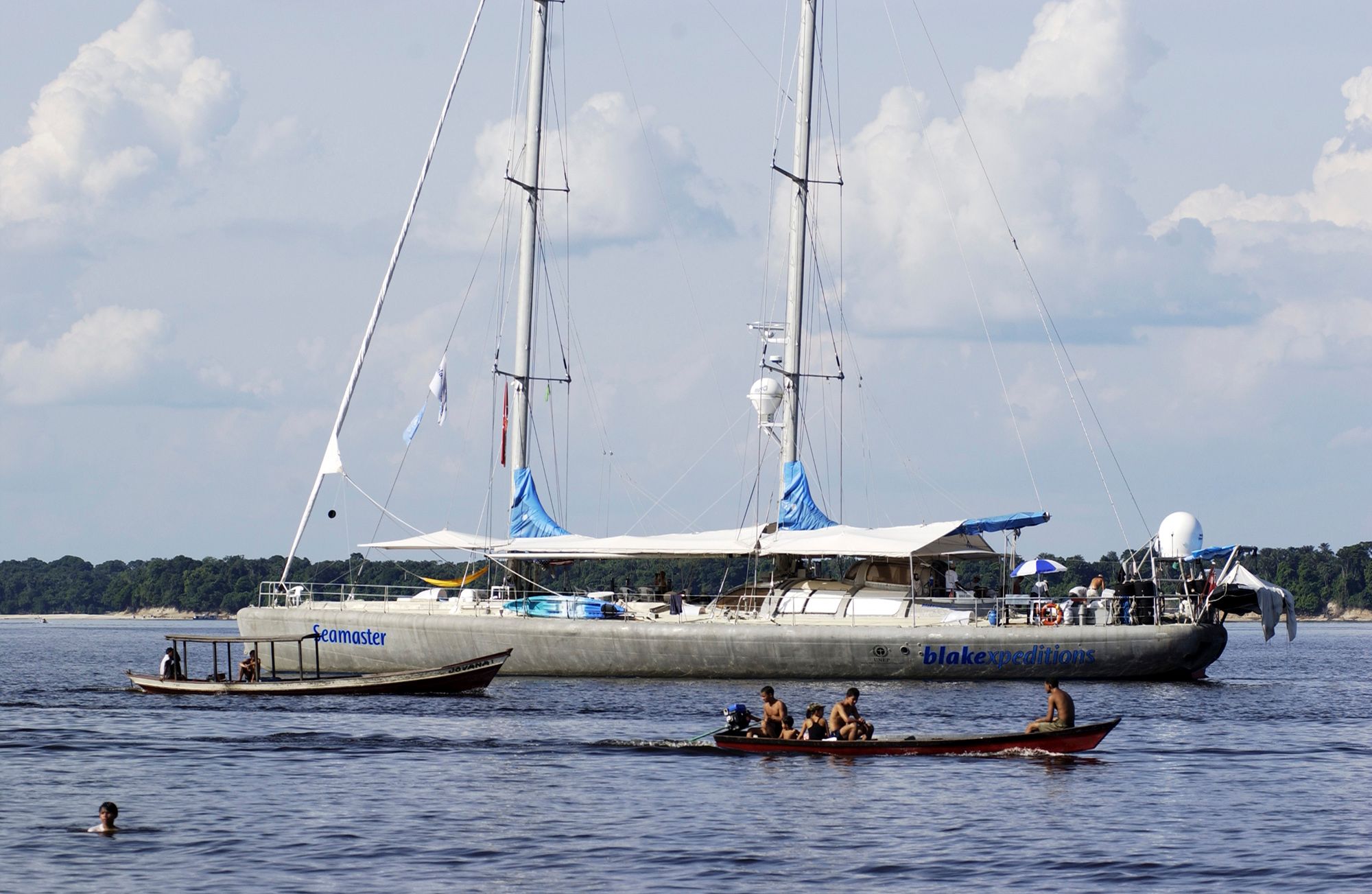
Seamaster at her furthest point upriver on the Rio Negro, a few days before turning around.

Photograph by and courtesy of Franck Socha / www.francksocha.com

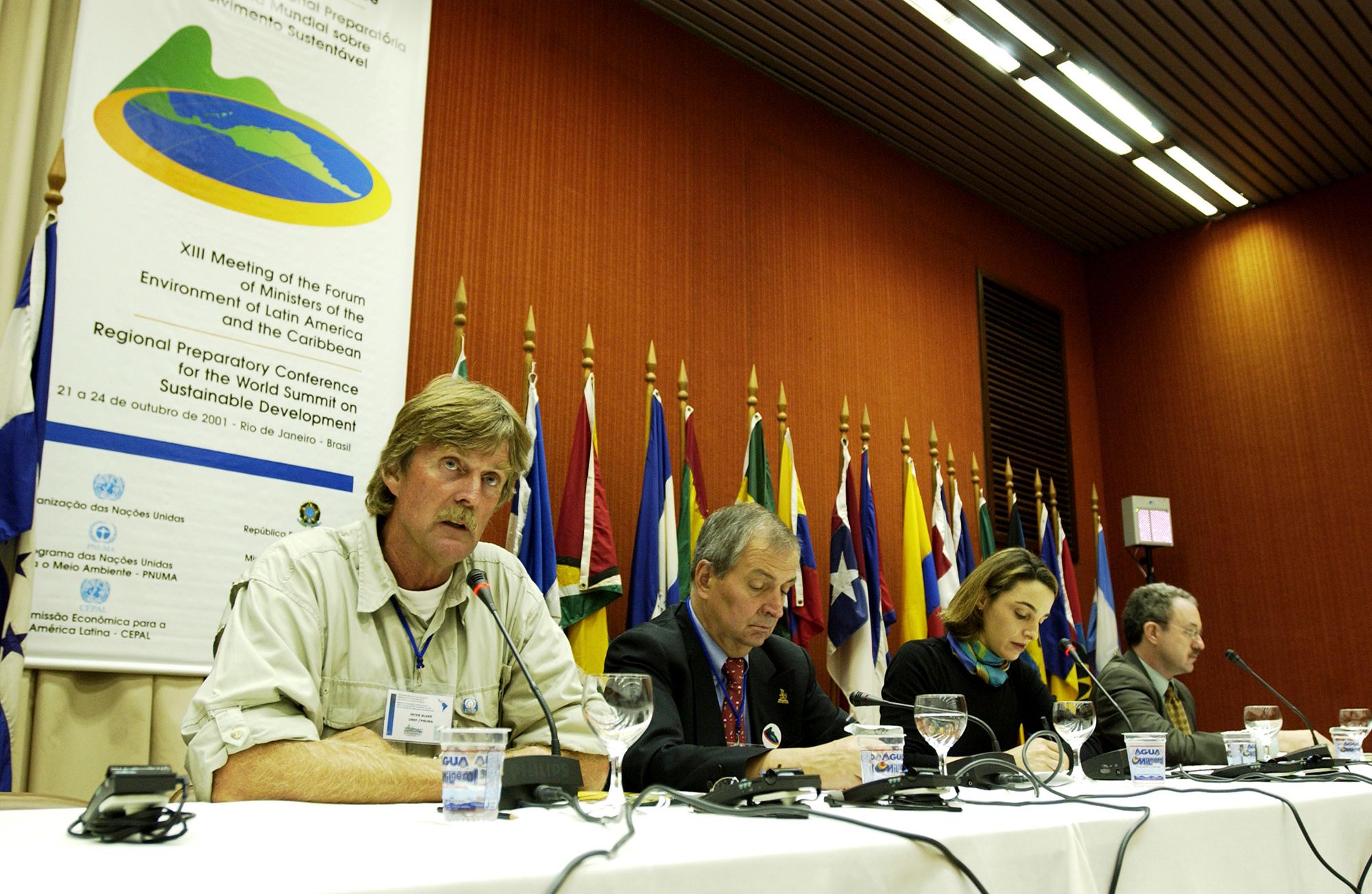
At a UNEP-sponsored meeting of the environment ministers of all the Latin American and Caribbean countries in Rio de Janeiro.

Photograph by and courtesy of Franck Socha / www.francksocha.com

Seamaster arriving at Novo Airao on the Rio Negro.

Photograph by and courtesy of Franck Socha / www.francksocha.com

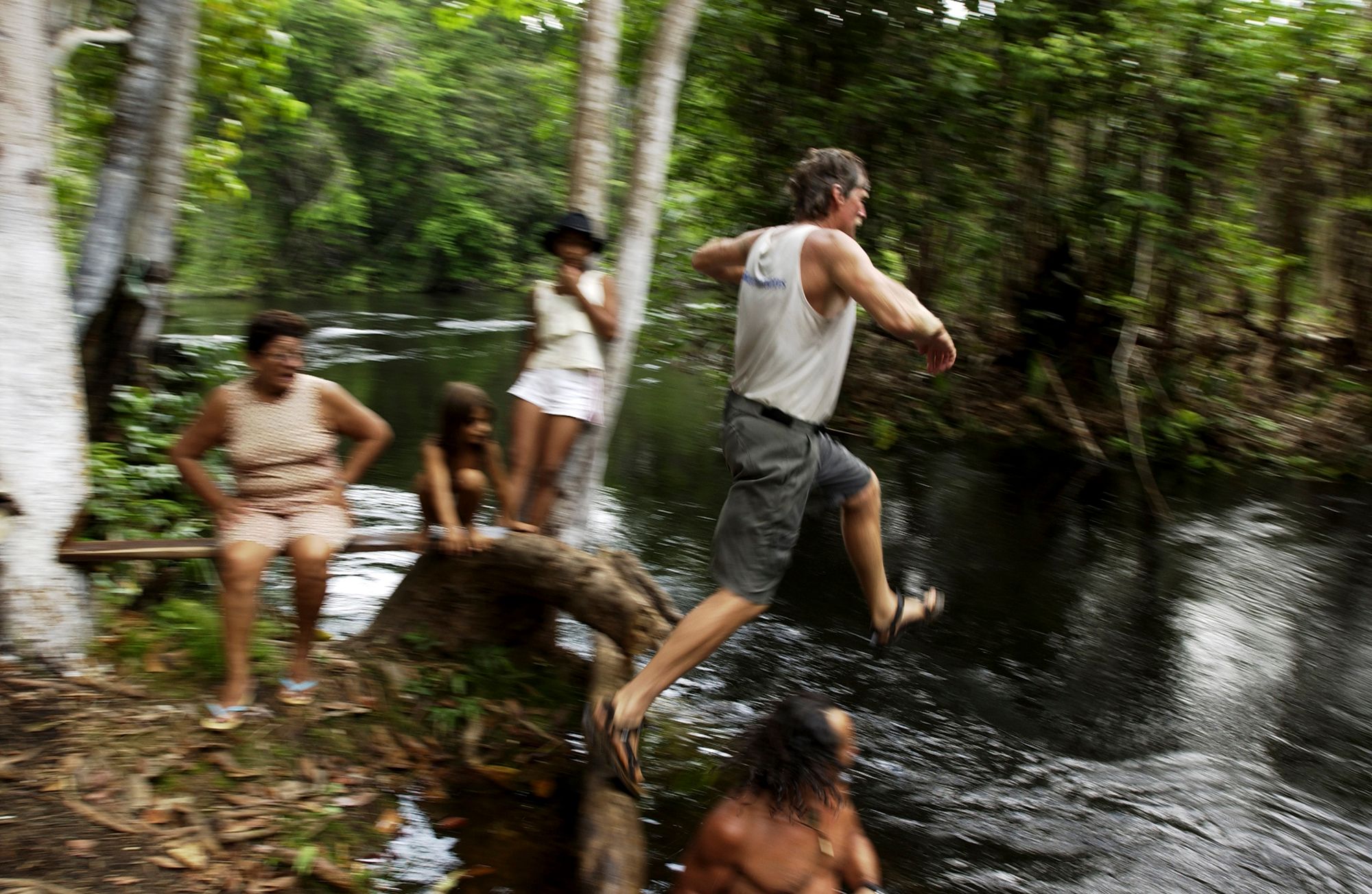
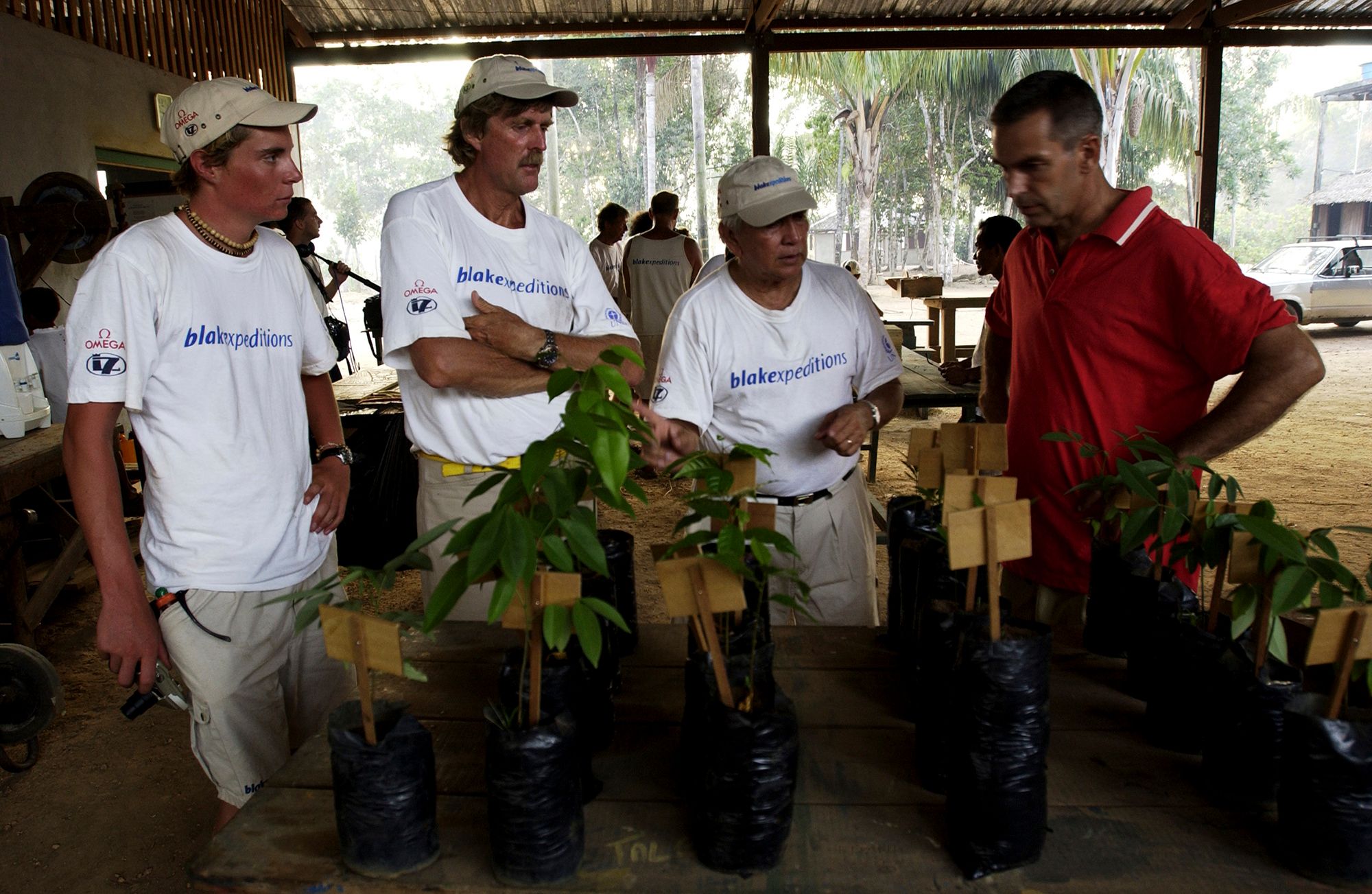
At the Fundação Almerinda Malaquias - the foundation run by Miguel Rocha da Silva that teaches sustainability practices to locals.

Photograph by and courtesy of Franck Socha / www.francksocha.com

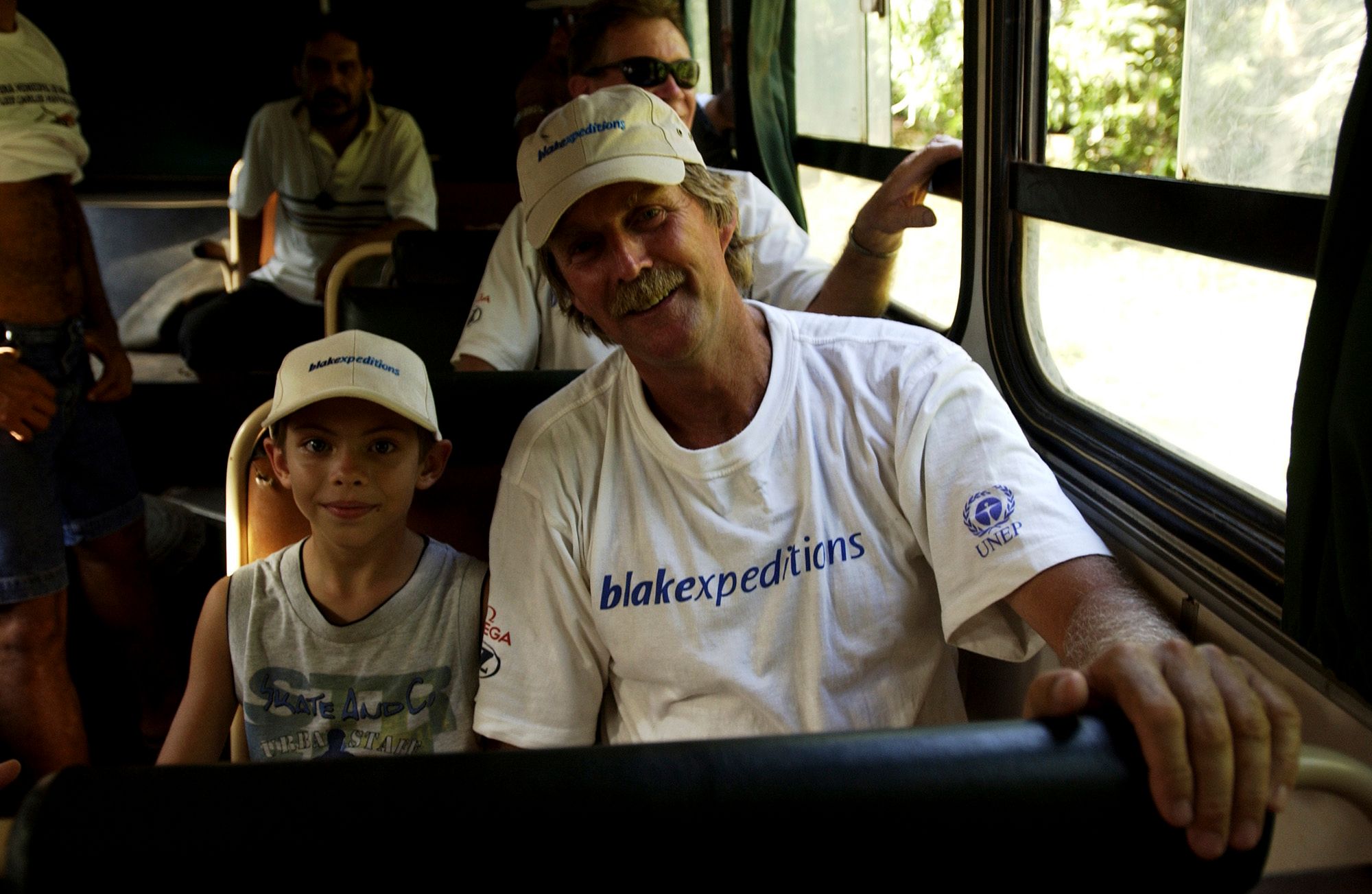
Taking the bus to a village near Novo Airão.

Photograph by and courtesy of Franck Socha / www.francksocha.com

Once a thriving town, Velho Airão was abandoned after it went bankrupt as a result of collapse of the rubber industry in the region. The ruins are now a destination for intrepid tourists and a memorial to Peter Blake was erected there in 2011.

Photograph by and courtesy of Franck Socha / www.francksocha.com

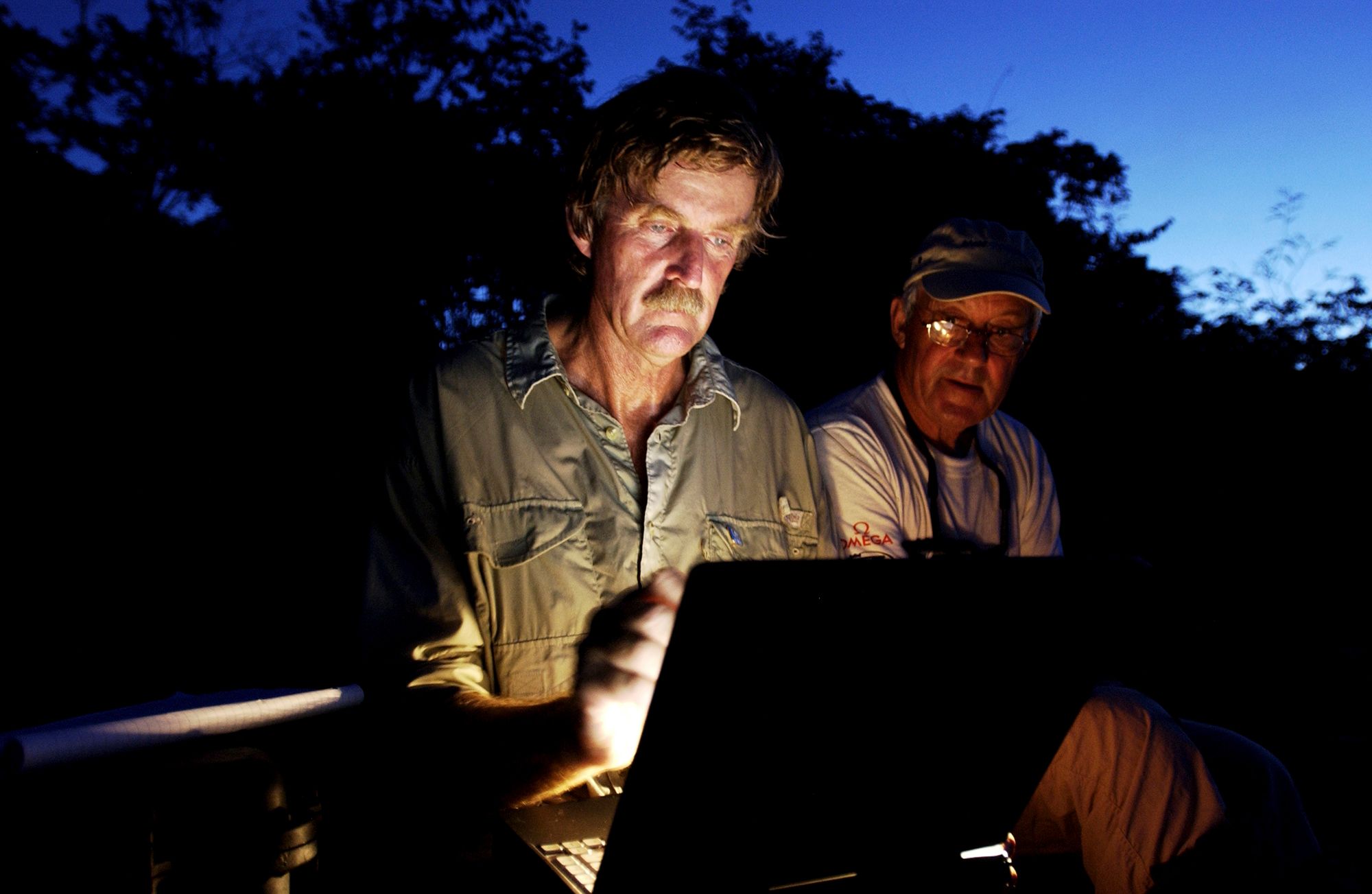
Dispataches were made through updates to the blakexpeditions website via a satellite connection, even in the middle of the Amazon.

Photograph by and courtesy of Franck Socha / www.francksocha.com

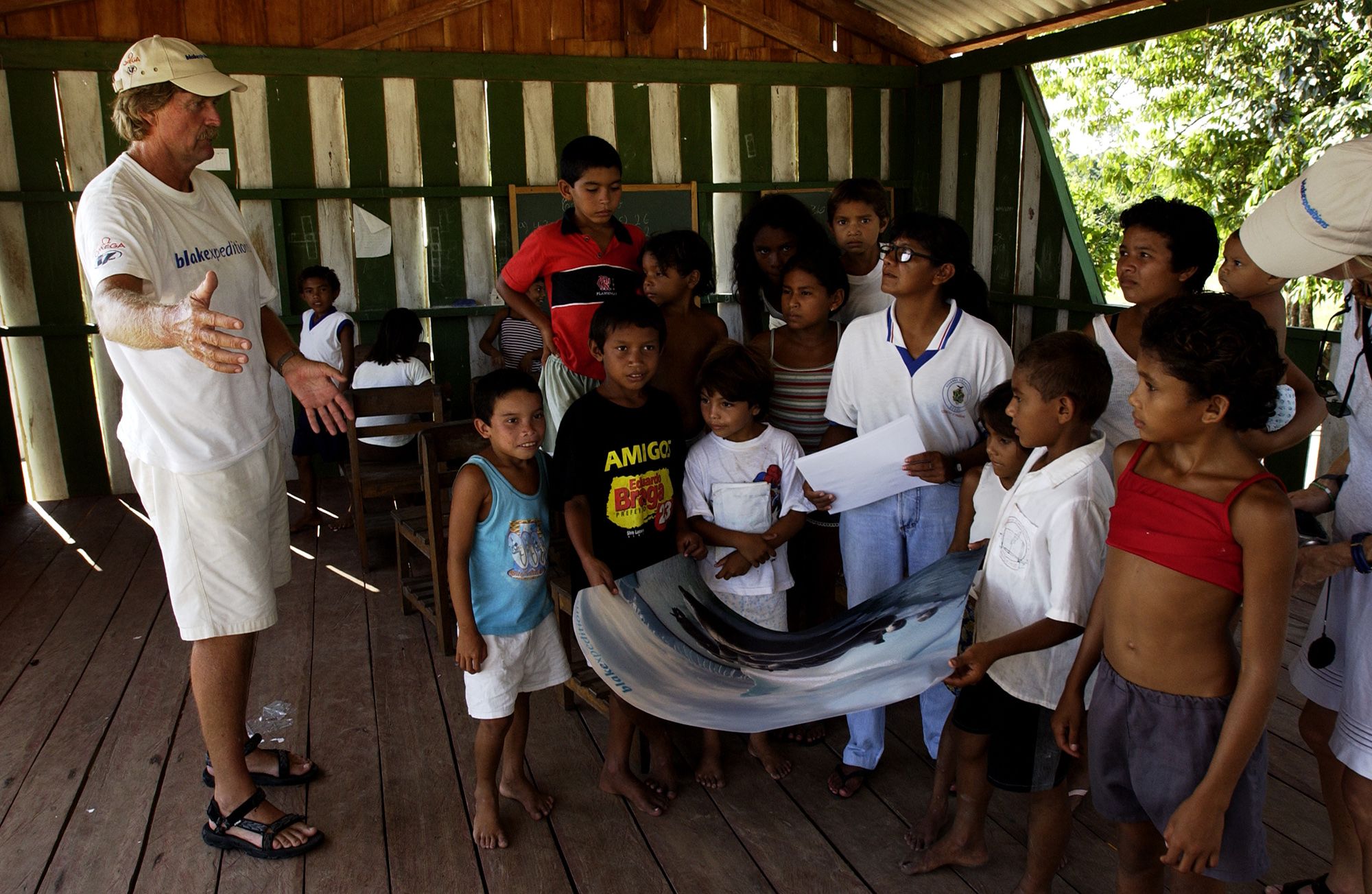
At a school in the remote town of Santa Helena on the Rio Negro, where the children marvelled at pictures of Peter on the Antarctic ice with penguins.

Photograph by and courtesy of Franck Socha / www.francksocha.com

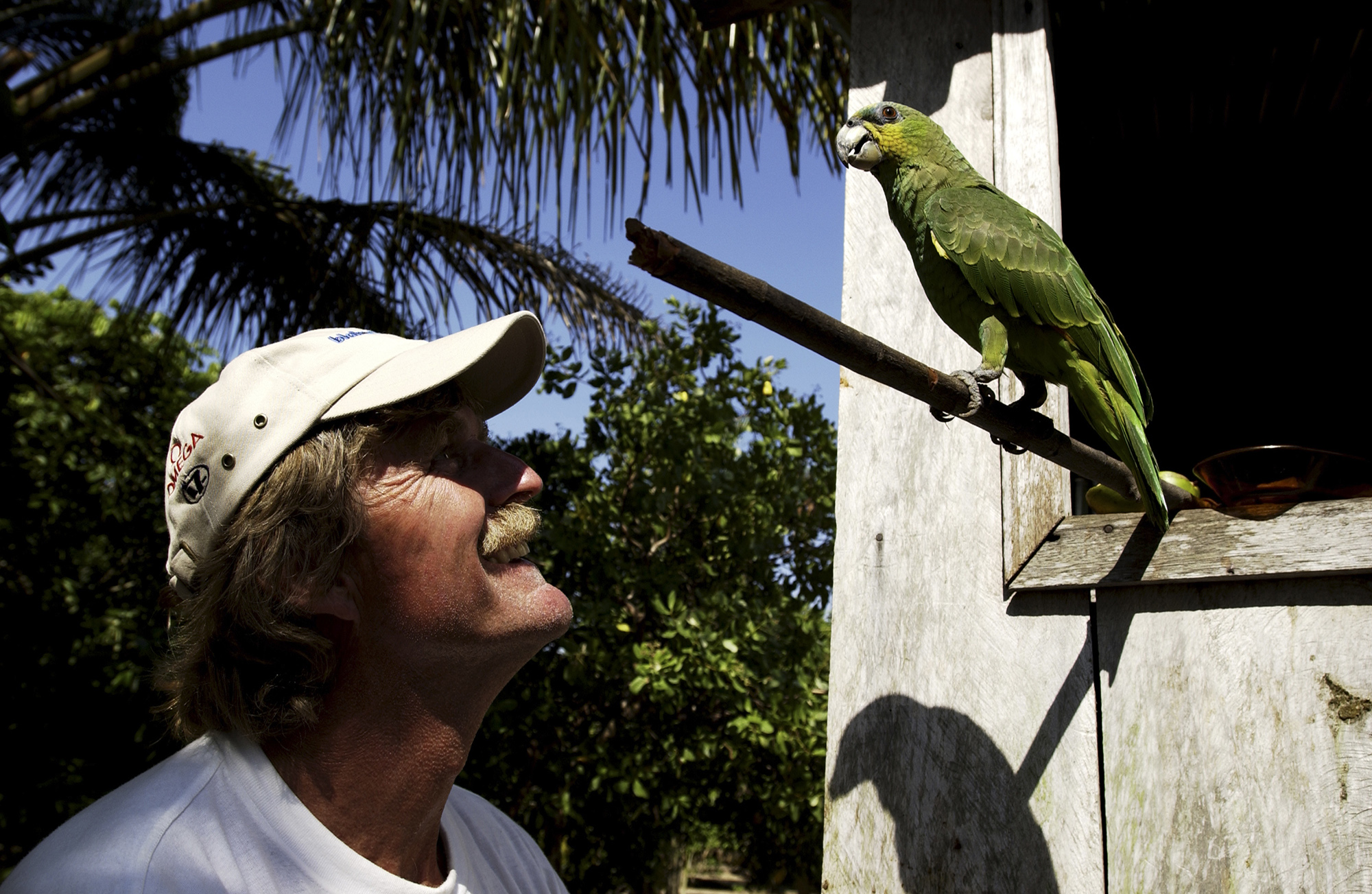
Encountering a parrot in Santa Helena.

Photograph by and courtesy of Franck Socha / www.francksocha.com

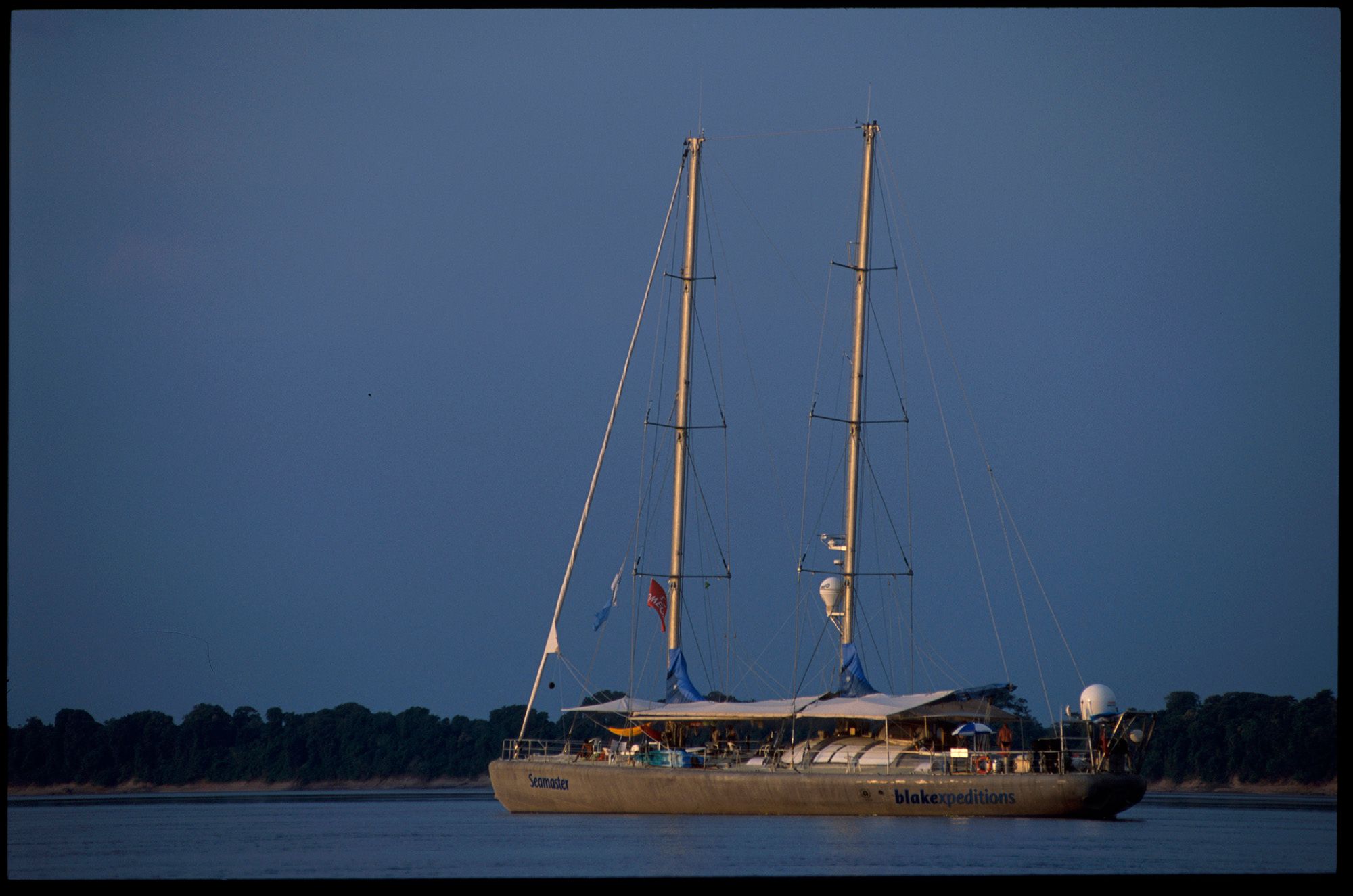
Seamaster, deep into the Amazon basin.

Photograph by and courtesy of Franck Socha / www.francksocha.com

WELCOME ONBOARD

While in New Zealand covering the 2000 America’s Cup, young French photographer Franck Socha met and photographed Sir Peter Blake, who had just led Team New Zealand’s successful defence and also announced his retirement from competitive sailing.

Back home in France, in 2001 Franck heard that Peter had established blakexpeditions and was planning a trip to explore the Amazon aboard Seamaster. He recalls:

I took a chance and emailed Peter, asking if he remembered me and if needed a photographer for his new adventure. He answered yes to both!

We established how we could work together in three emails. I remember that on the first one he signed Sir Peter Blake, the second Peter Blake, and in the third he finished with Welcome onboard, Peter.

It was a privilege to work with Peter – I was a young unknown photographer; Peter Blake was a legend; and it was the first time I was able to use my skills to support a project that touched me, like protecting nature.

See a selection of Franck Socha’s photographs from his time with Seamaster. You can also read some excerpts from the Seamaster log, September–November 2001.

SANTAREM, RIO TAPAJOS

A day of diving - our first in the Amazon. Miguel brought Carlos, a long-time friend and local scuba diver, aboard to go over the charts with us and help identify the best dive spots. My notes from the session indicate:

Dive spot 1 - Caiman (alligator family) and tropical fish

Dive spot 2 - Caiman, turtles, black piranha and anaconda (I’m not sure that I will dive this one until Ollie has had a good look around first and returns in one piece)

Dive spot 3 - Much the same as #2


Sir Peter Blake, Seamaster log, 9 October 2001

RIO ARUA

A few facts and figures – that we will no doubt repeat from time to time: They give meaning to the reasons that we are here.

The Amazon is the largest equatorial forest in the world and occupies approx 42% of the area of Brazil

It contains 30% of the remaining forest in the world – larger than the whole of Western Europe.

The Amazon comprises one tenth of our planets plant and animal species and produces one fifth of the world’s oxygen.

The river collects water from over 1100 tributaries as it travels more than 4000 miles from the Andes mountains to the Atlantic Ocean.

It is estimated to carry 20% of the world’s fresh water.

It drains an area of over 7 million square kilometres.

At the mouth of the river, water flows into the Atlantic at 160-200,000 cubic meters per second – a flow greater than the world’s 8 biggest rivers added together.


Sir Peter Blake, Seamaster log, 28 September 2001

ARUA

Since leaving Belem 9 days ago, we have been amazed by the beauty of the river scenery, by the friendliness of these shy people, by the life in the water, and even though we have yet to encounter it first hand, by the life that we know we will see on the edge of the jungle.


Sir Peter Blake, Seamaster log, 9 October 2001

ARUA

To actually see and begin to understand the vastness of this region, and how vital it is to the overall ongoing health of the planet, means experiencing it – breathing it, smelling it, listening to it, feeling it.


Sir Peter Blake, Seamaster log, 16 October 2001

AMAZON

The bio-diversity count in the Amazon is mind-numbing. Life here is almost uncountable – there is so much of it.

The following are all approximate numbers, because no-one knows for sure, and most estimates seem to vary enormously – sometimes by a factor of 10 or more.

Fish Species: 2,500
Mammals: 300
Birds: 2,000
Insects: Millions
Trees: up to 300 different species per hectare
Plants: 60,000 to 300,000


Sir Peter Blake, Seamaster log, 16 October 2001

RIO NEGRO

The Rio Negro – the fourth largest river in the world, and the second biggest tributary to the Rio Amazonas, will be our “base” for the next month or so.

We plan to be in port for a few days, preparing for what lies ahead, much of it unknown.

It promises to be an exciting time.

For those of us on Seamaster, who have put up with the daily grind up-river, to be here is another peak climbed.

Our real adventures are about to begin. We hope that you will be onboard with us.


Sir Peter Blake, Seamaster log, 18 October 2001

RIO DE JANEIRO

I have just returned from a rather quick round trip to Rio de Janeiro - to meet with Dr Klaus Toepfer, the head of the United Nations Environment Programme, and attend a UNEP-sponsored meeting of the environment ministers of all the Latin American and Caribbean countries.

The ministers I spoke to were all very aware of the need to manage the Amazon and its resources with extreme caution, in a very sustainable way. But there are many other pressures being brought to bear and the solutions to saving the Amazon from catastrophic exploitation on a grand scale will not be easily found.

… I am fast coming to the conclusion that the rest of the world is going to have to act if the Amazon is to be saved.


Sir Peter Blake, Seamaster log, 25 October 2001

RIO NEGRO

We had no idea that we would see so many signs of population:

There are almost always houses in sight, with small villages and larger towns at regular intervals along the river. There is much activity on the river, which is the main highway as well as the fishing ground.


Sir Peter Blake, Seamaster log, 16 October 2001

NOVO AIRÃO

Our guide is Miguel Rocha da Silva – who was the guide for Jacques Cousteau when Calypso spent 18 months here. Miguel is a wealth of information.


Sir Peter Blake, Seamaster log, 28 September 2001

NOVO AIRÃO

The mayor of Novo Airão came for breakfast – along with quite a few friends – but they were all very friendly people who had looked after us extremely well last night.


Sir Peter Blake, Seamaster log, 27 October 2001

VELHO AIRÃO

Flights of parrots are squawking overhead as I sit on a rocky ledge in front of the old, overgrown brick and plaster home – with its arched windows and grand front steps – complete with iron securing ring. Obviously the river comes right up to the front door at high water.


Sir Peter Blake, Seamaster log, 30 October 2001

VELHO AIRÃO

Don has been taking digital photos and is now installing them in the computer, for inclusion in this Log that we expect to send via our river bank transmission system through the satellite in the next few minutes or so.

However, darkness is overtaking me as I type this and a torch is now being used so that I can see the keys.


Sir Peter Blake, Seamaster log, 30 October 2001

SANTA HELENA

We were welcomed into the village’s small school – a small, open air building with a roof but no walls, some worn old desks and around 15 bright eyed smiling young children. We were introduced by the teacher and through our guide and friend Miguel we were able to tell them a little about where we were from. “In Nove Zealandia” (New Zealand), Miguel translated, “there are no caiman, no jaguars, no snakes or monkeys, no otters, manatees nor river dolphins”.

He explained that we were here because we thought the Amazon so special and the animals that lived here so important.


Dr Mark Orams, Seamaster log, 17 November 2001

SANTA HELENA

Most of the bigger animals here are already gone – or nearly so. Many others are following the same fate. The world market for endangered species, be it jaguar pelts or boa constrictor skins or live parrots – is increasing.


Sir Peter Blake, Seamaster log, 9 October 2001

"SEE FOR OURSELVES"

Why are we doing this? The reasons are similar to those that took us to 70 degrees south on the Antarctic Peninsula. It is part of our mission to visit the ‘pulse points’ of the planet and report on what we see, on what we find, and on what we learn through our adventures on this very special vessel of ours.

Rather than reading about it, we want to ‘see for ourselves’, form our own opinions, and share our experiences with as many people as possible.


Sir Peter Blake, Seamaster log, 5 September 2001