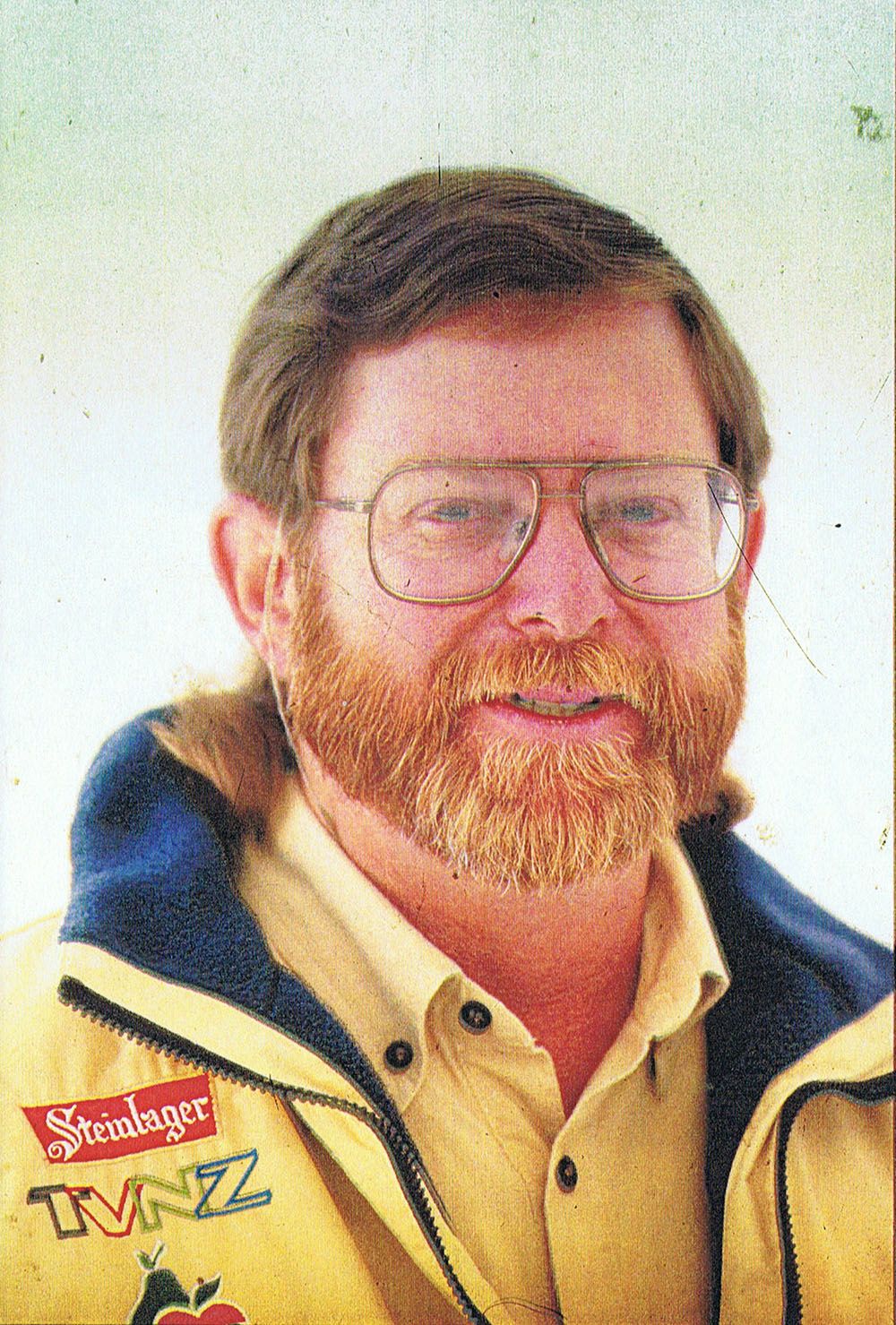
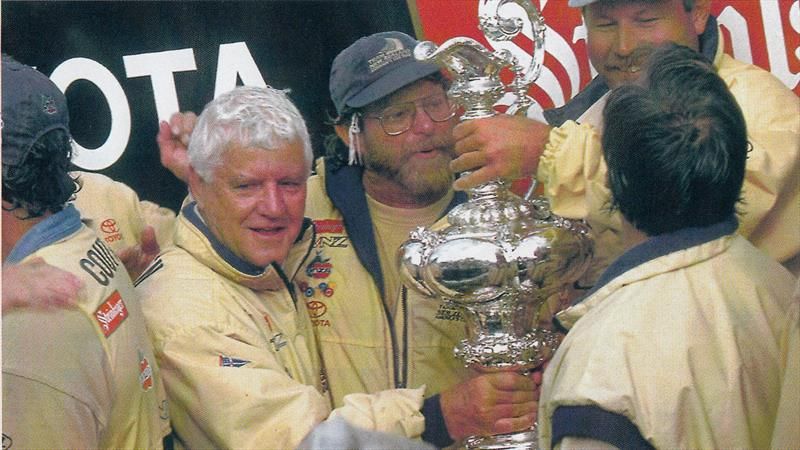
Laurie Davidson and Doug Peterson with the ‘Aud Mug’, 1995.

Photograph by and courtesy of Sally Samins

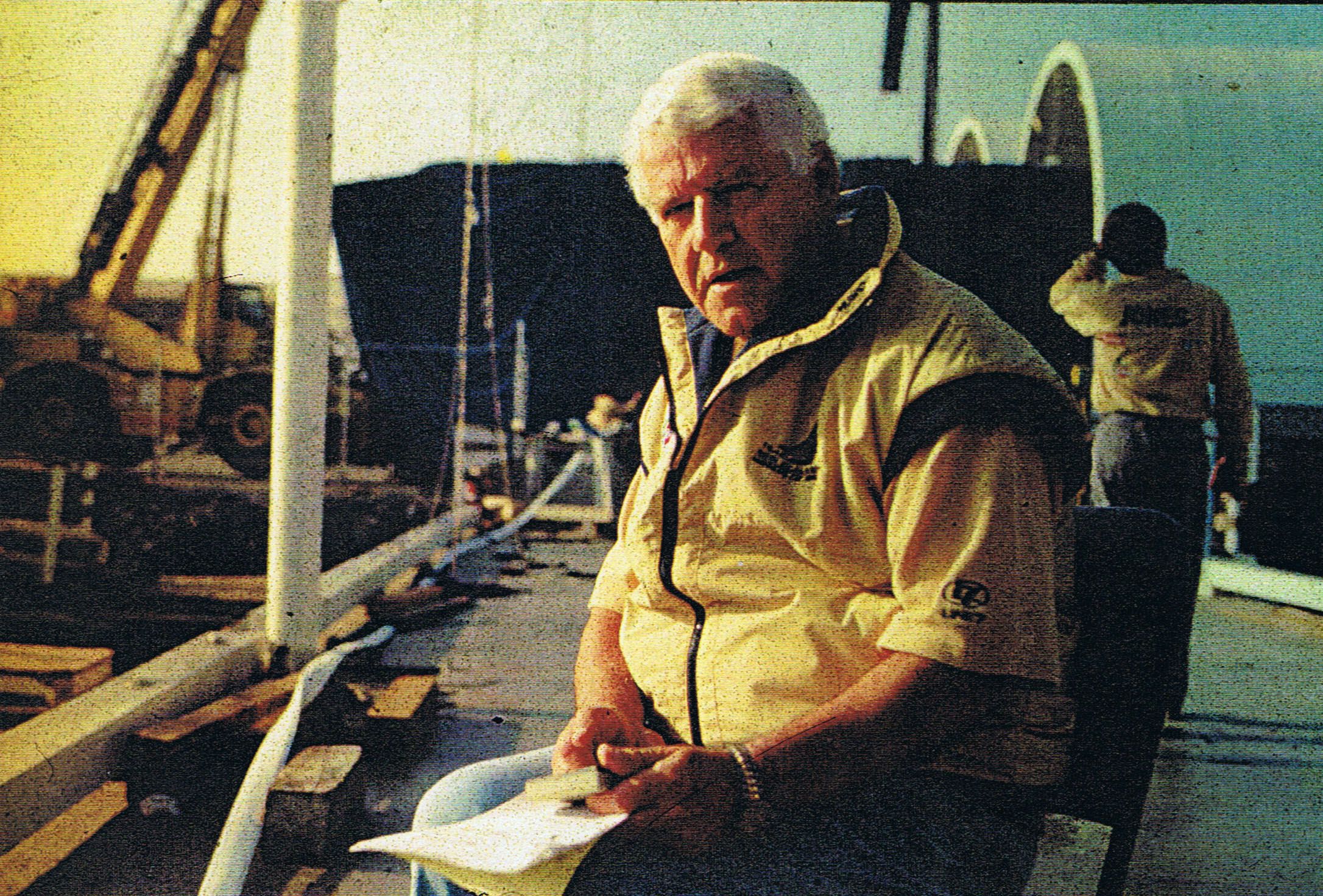
Laurie Davidson, 1995.

Photograph by Daniel Forster, reproduced courtesy of Daniel Forster and Emirates Team New Zealand

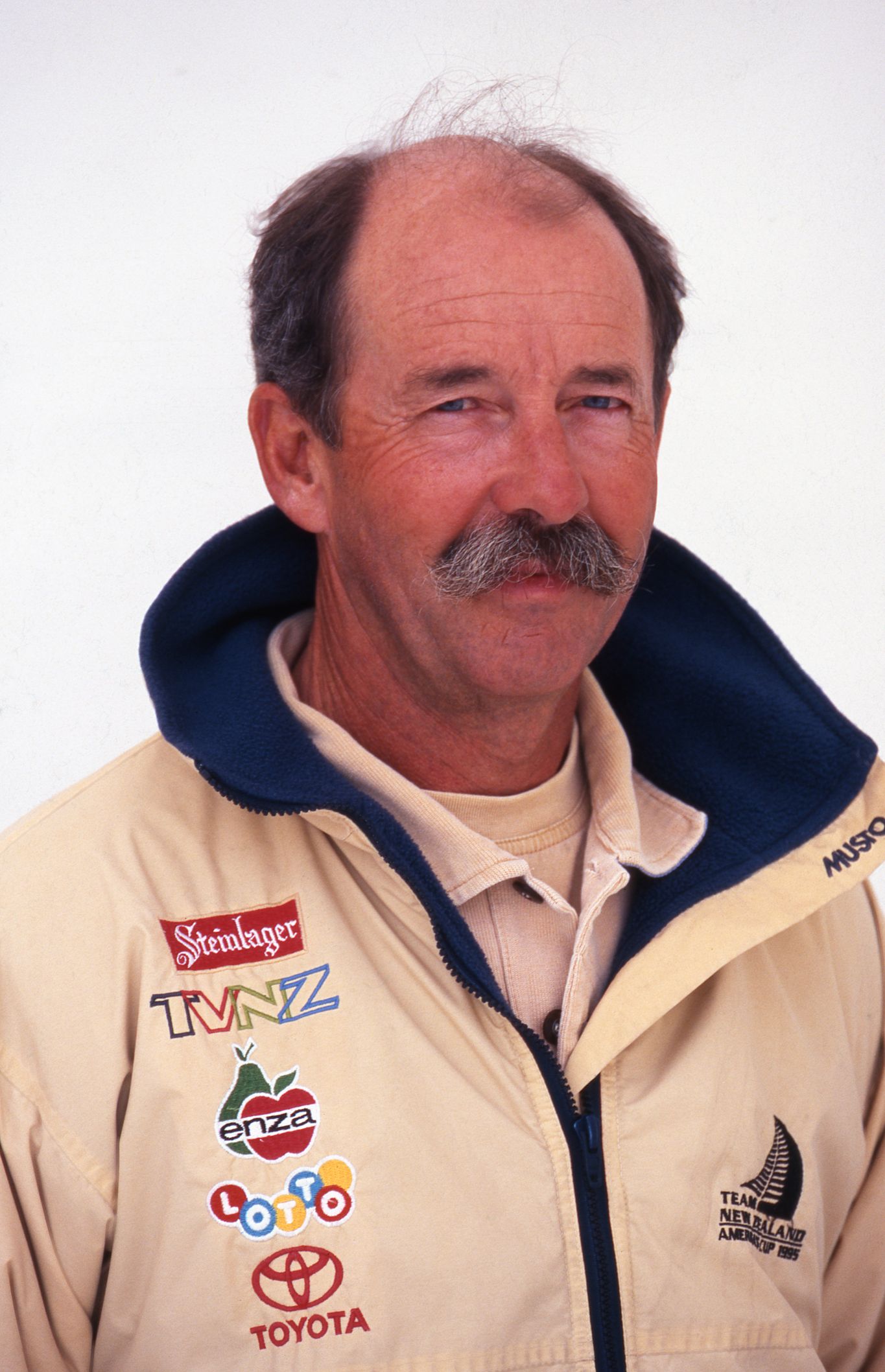
Doug Peterson, 1995.

Photograph by Daniel Forster, reproduced courtesy of Daniel Forster and Emirates Team New Zealand

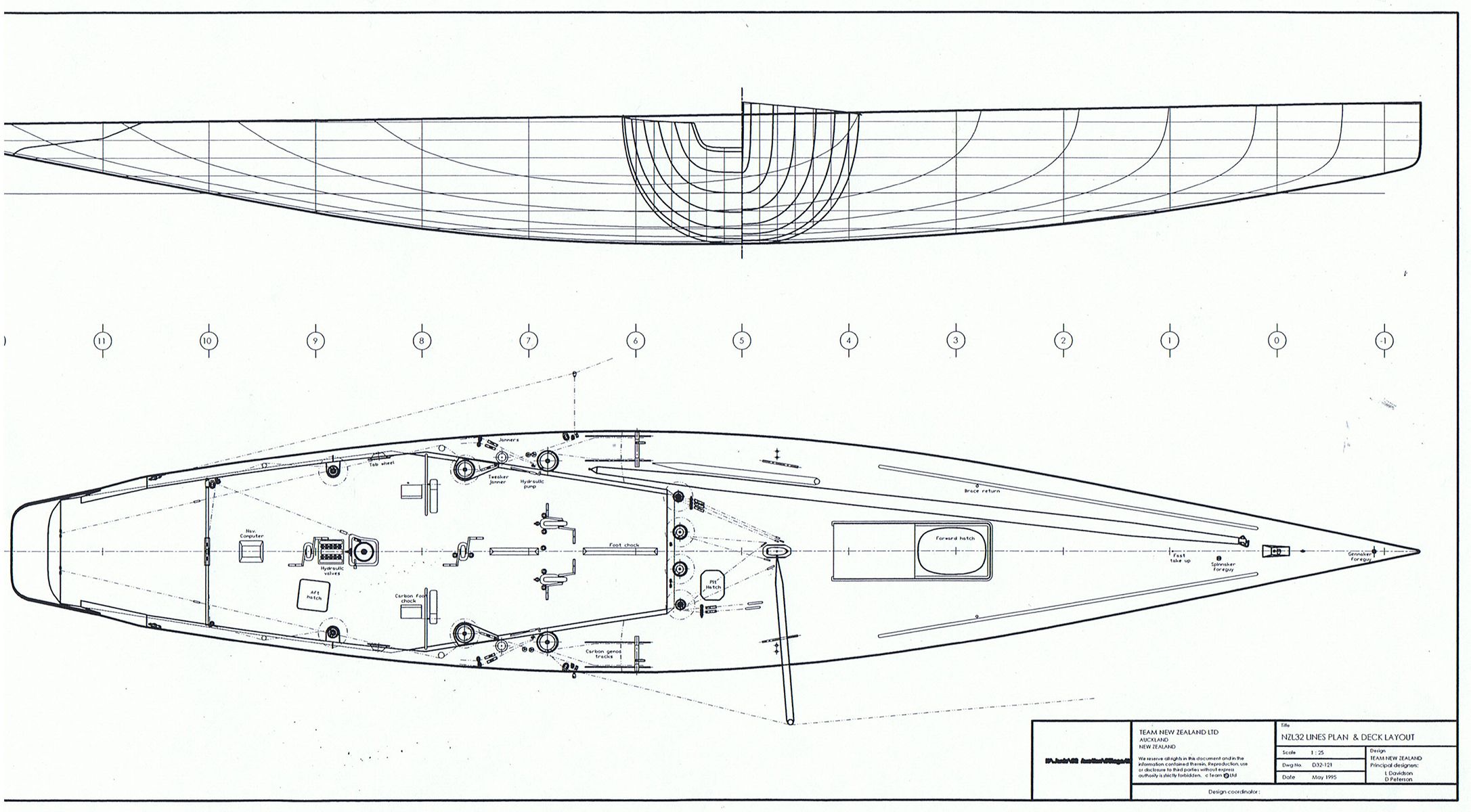
Lines plan and deck layout for NZL32 by Laurie Davidson and Doug Peterson, 1995.

Reproduced courtesy of Emirates Team New Zealand

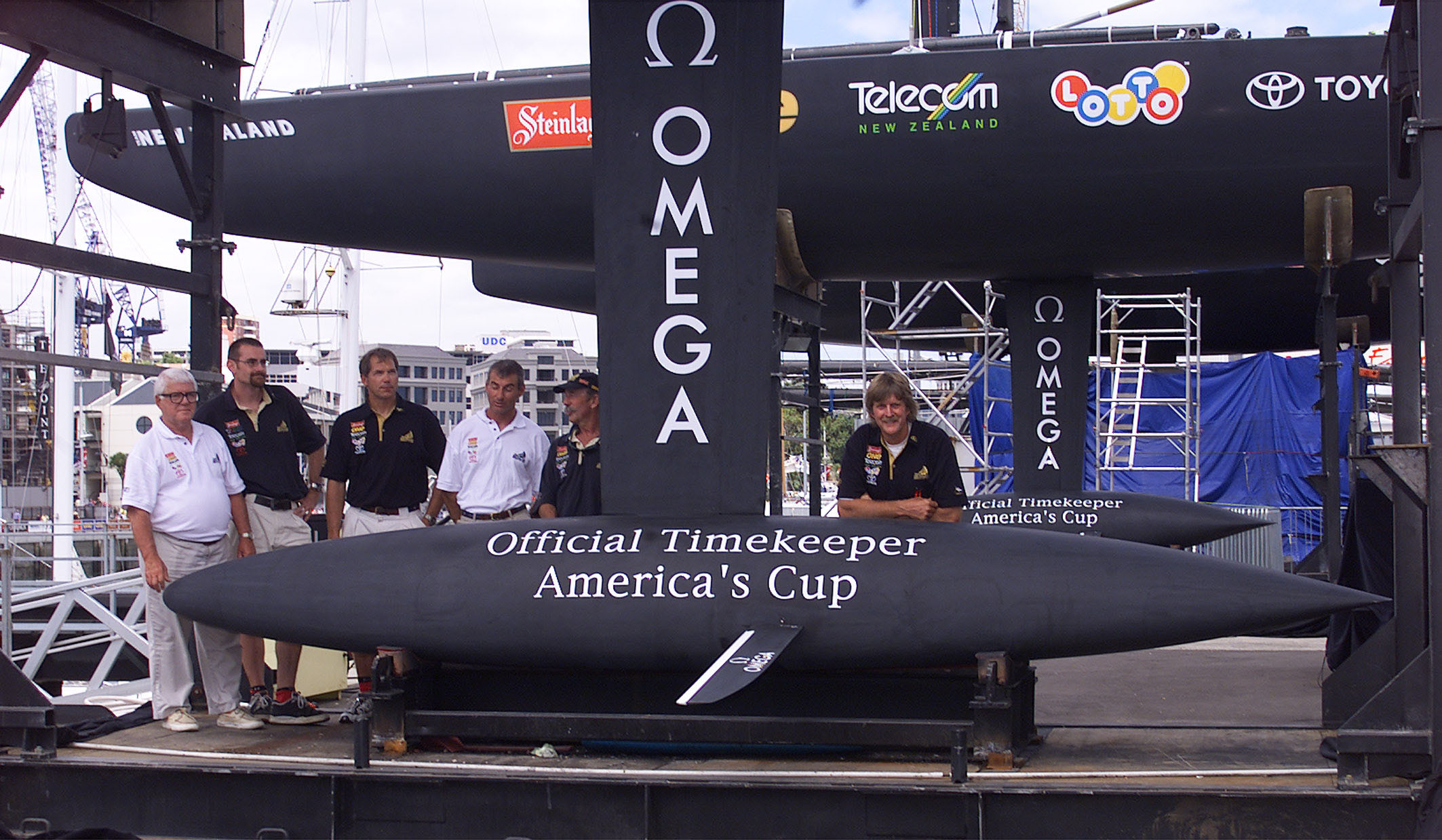
Designers and Sir Peter Blake with NZL60 and NZL 57, January 2000. (L-R) Laurie Davidson, Nick Holroyd, Clay Oliver, Mike Drummond and Tom Schnackenberg.

Photograph by Martin Sykes, New Zealand Herald

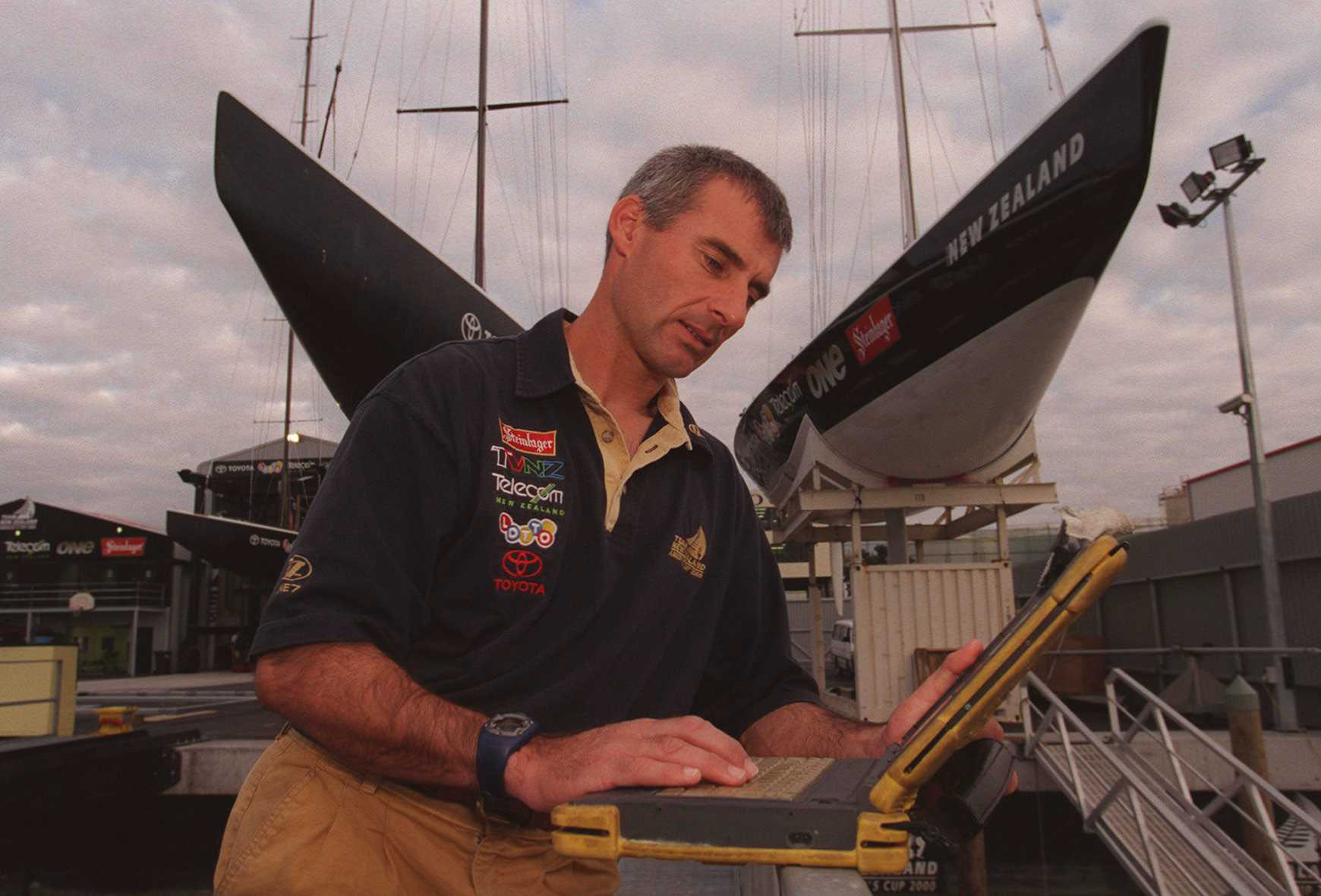
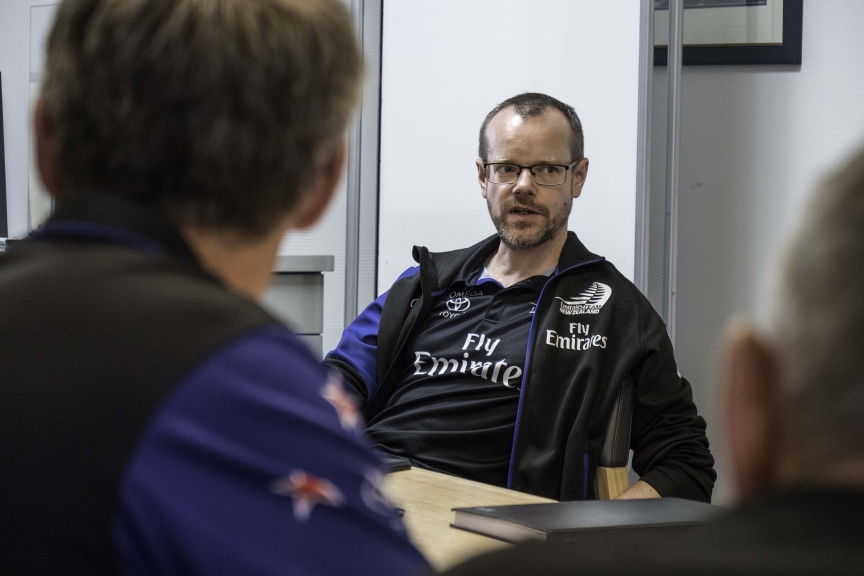
Mike Drummond with the laptop he used in his role as navigator, 1999.

Photograph by Russell Smith, New Zealand Herald

Photograph courtesy of Emirates Team New Zealand

Photograph courtesy of Emirates Team New Zealand

DESIGNING WINNERS

The America’s Cup has long been a technological playground for teams battling to outdo one another on the water. No single person designs an entire America’s Cup yacht. Instead, a number of specialists and their teams design different aspects of the boats. Designers work closely with the crew, continually sharing and checking their ideas to determine what might help them win. Training on the water is the ultimate testing ground where lessons are learned about improving the design and durability of the boats.

Learn about the principal designers behind Team New Zealand’s America’s Cup-winning yachts of 1995, 2000, 2017 and 2021.

LAURIE DAVIDSON CNZM

(1927–)
New Zealand

2000, Chief designer, NZL60

1995, Principal designer/Chief designer, NZL32


New Zealander Laurie Davidson is an internationally renowned yacht designer. He helped design the world’s first fibreglass 12-metre yachts for the 1987 New Zealand Challenge for the America’s Cup. During the America’s Cup of 1992 in San Diego, he observed and made drawings of the leading contenders, including the cutting-edge America. This information was critical to the success of Team New Zealand’s design programme for the America’s Cup in 1995 where Davidson co-designed (with Doug Peterson) the lines of the hulls for NZL32 (Black Magic) and NZL38. In 2000, Davidson’s design repeated the success of 1995, winning again in five straight races.

DOUG PETERSON

(1945–2017)
USA

1995, Principal designer, NZL32


American Doug Peterson’s designs pioneered many innovations in racing and cruising yachts. His sometimes angular hull and keel designs, inspired by aeronautical foil shapes, influenced a new generation of designers. He helped design the 1992 America's Cup winner America but moved to New Zealand in 1993 to work with Team New Zealand. Peterson gained residency here to qualify for the team under the America’s Cup nationality rules at that time. “I had lots of offers,” he said in 1995, “but this was the best chance of actually being in a real team.” His knowledge of his home waters in San Diego played an essential part in Team New Zealand’s win there in 1995. In 2000, Peterson designed the winning Louis Vuitton Cup boat for Prada Challenge. Peterson’s induction into the America’s Cup Hall of Fame was announced in March 2017. He passed away that June, just as New Zealand were winning their third America’s Cup.

“In a way, it’s nice that Doug passed right about the time … when New Zealand won the 35th America’s Cup,” said Greg Stewart, a yacht designer and friend from San Diego. “I know he was really proud of that time in his life.”

DRAWING UP THE CONCEPT, 1995

These are hull lines and deck plans for NZL32. Laurie Davidson originally drew his hull line concepts on polyester film with pencil. His drawings were then fed into a computer programme by co-designer Doug Peterson. Davidson was not into computers at that time – he described himself as 'behind the times', whereas Doug Peterson 'was very good at it'. However, he said, ‘A computer can’t design. Computers verify. Designers design.’ Davidson bought his first computer after the successful campaign.

CLAY OLIVER

(1953/4–)
USA

2000, Principal designer, NZL60


American-born Oliver initially chased Russian submarines in the Mediterranean as a US Naval Architect before working his way up the ranks in America’s Cup design as a computer technologist from the early 1980s. He helped design Dennis Conner's winning Stars and Stripes in 1987 and its successful defence a year later. However, he quit the United States team after Conner called designer Bruce Farr “a loser” at a Cup prize-giving. Oliver then joined Farr on the New Zealand Challenge in 1992. In 1996 he replaced veteran Doug Peterson on the design team when Peterson moved over to Italy to co-design Prada.

As Principal designer for the America’s Cup defence in 2000, Oliver shared the boat development work with veteran Kiwi designer Laurie Davidson and served as an extra man onboard. Oliver remained with Team New Zealand as part of the design and sailing team for the 2003 defence and the 2007 challenge.

MIKE DRUMMOND

(1963–)
New Zealand

2000, Design team and navigator, NZL60


Mike Drummond began to sail as a child at the Glendowie Boating Club, where he raced Arrow dinghies. He was part of the New Zealand syndicate from 1987 through to 2003 before joining Alinghi (2007) and then Oracle Racing (2010, 2013). When he signed with the New Zealand Challenge in 1987 it was as a member of the shore crew, but he soon became interested in yacht design. His design knowledge grew over the years and, with a degree in engineering, he became regarded as one of the best in the business.

Drummond has also sailed on many of the America’s Cup campaigns he’s been involved in. For the successful defence of 2000 he sailed in two of the five races as navigator, alternating with Tom Schnackenberg. That year Drummond also came up with the idea of the “Millenium Rig’ (a different configuration for the standing rigging supporting the yacht’s mast), credited as a major contributor to NZL60's speed advantage.

DAN BERNASCONI

UK

2021, Head of design, AC75 2017, Technical director, AC50


Dan grew up in England and studied Engineering at Cambridge University. A role within the McLaren Formula One Racing team introduced Dan to high-tech sport, but, thankfully for the world of yachting, after completing a PhD in Mathematical Modelling and Aerodynamics, he entered the world of high-performance sailing. He designed yachts for America’s Cup entries for Germany (2007) and Alinghi (2010) specialising in hydrodynamic design and performance optimisation.

Dan joined Emirates Team New Zealand in 2010 after the break-up of Alinghi and he was the Technical Director of the design team for the 2017 winning campaign in Bermuda – a triumph for design leadership. From the finely tuned dagger boards to the complex foiling systems required to propel their AC50 to victory, and rigorous simulations, Dan attributed Team New Zealand’s success to an attitude of experimentation and creativity:

“Good design is having a clear understanding of the problem you’re trying to solve; being open to exploring as wide a realm of solutions as you can; focusing on the best options; and then thoroughly optimising the chosen solution.”

Dan and his team explored radical concept designs for the AC75s for the 2021 America’s Cup defence. The team rapidly learned during the regatta how best the handle the "rocketship" Te Rehutai and Emirates Team New Zealand successfully defended the Cup, winning 7-3 against Italy's Luna Rossa.
TOM SCHNACKENBERG OBE

(1945–)
New Zealand

2000, Design coordinator, NZL60

1995, Design coordinator, NZL32


New Zealander Tom Schnackenberg started his long involvement with the America's Cup in the 1977 challenge in Newport where he designed sails for the American defender, Enterprise. He has been involved in 12 cup campaigns, including 1983 when he designed sails for Australia II, the yacht that took the cup away from the US, for which he received an honorary Medal of the Order of Australia. He remained with the Australians for the unsuccessful 1987 defence, but then came on board with New Zealand for the 1988 big boat challenge.

He was design coordinator and navigator for New Zealand's successful 1995 and 2000 campaigns, and New Zealand syndicate head in 2003 when Alinghi took the cup. He remained with the team for the 2007 America's Cup, working as a design and data analyst.

Schnackenberg worked with Artemis Racing in the lead up to the 2013 America's Cup as their head of performance and design.