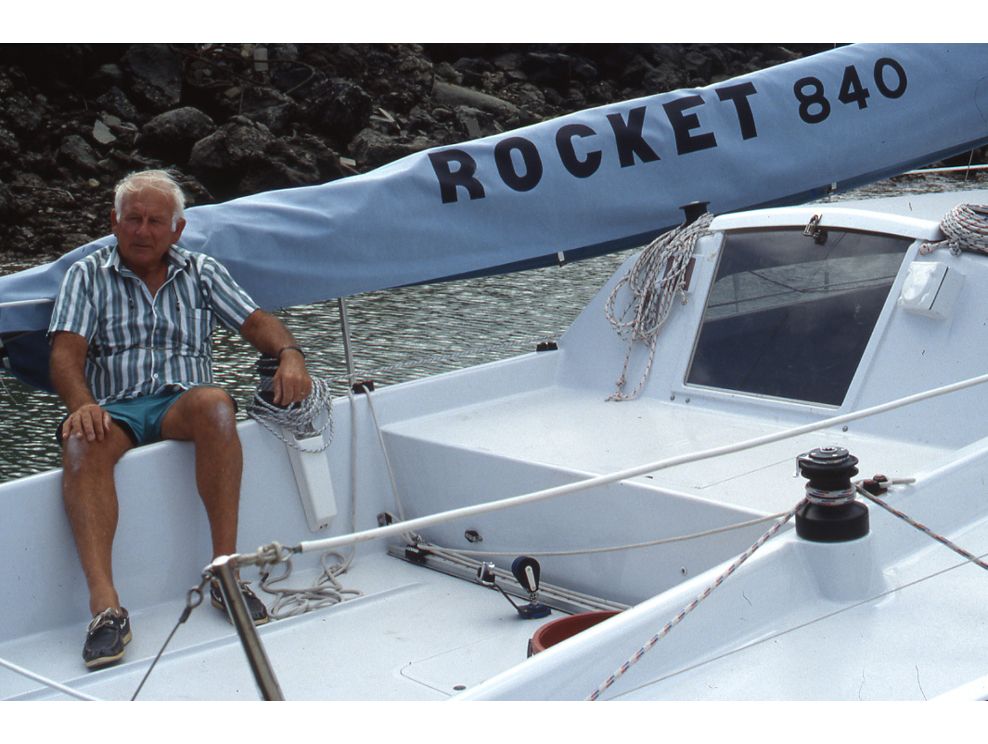
Jim Young.

Photograph by David Pardon, Sea Spray Collection, New Zealand Maritime Museum Hui Te Ananui a Tangaroa

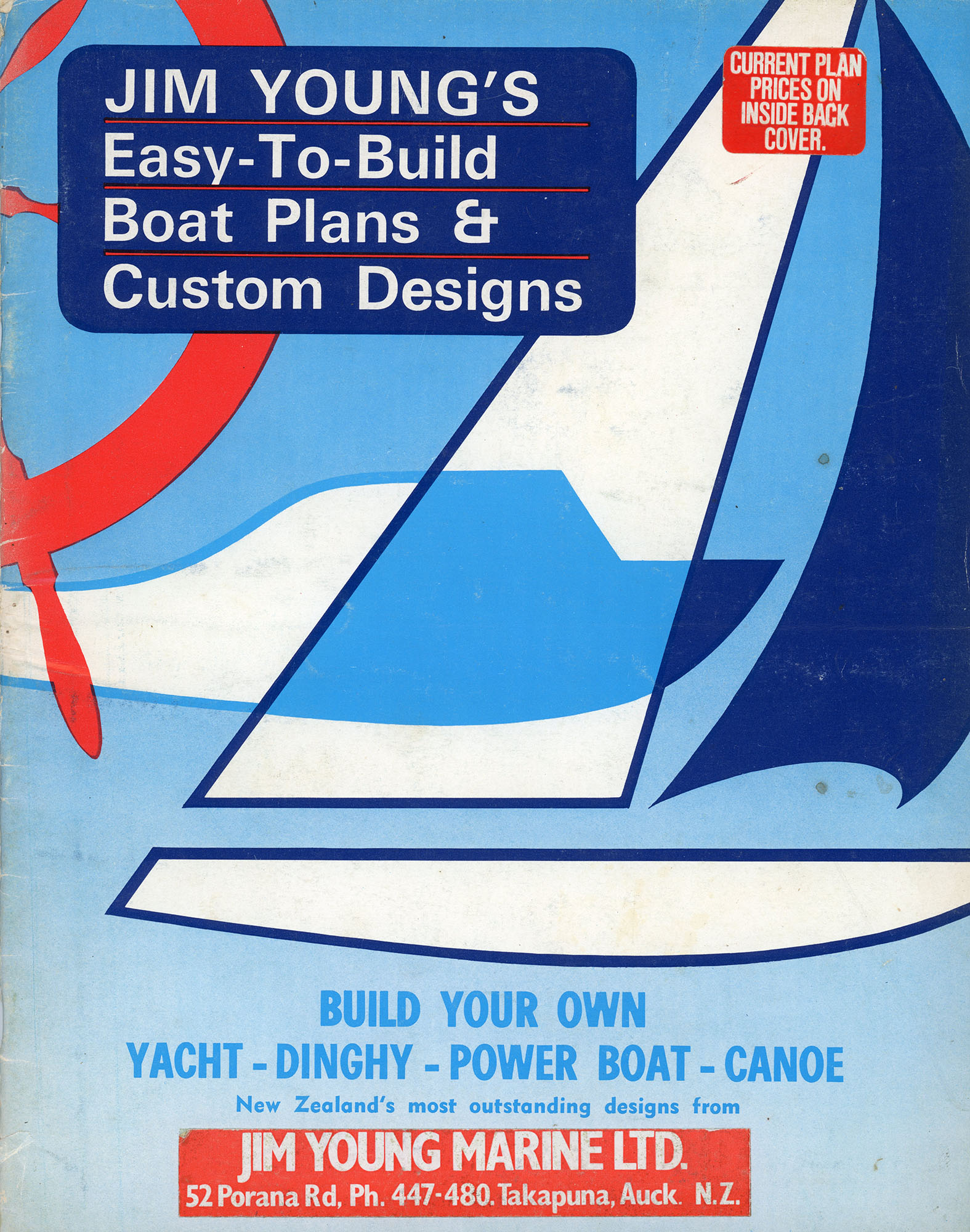
Book of Jim Young's easy-to-build boat plans & custom designs

8991 New Zealand Maritime Museum Hui Te Ananui a Tangaroa

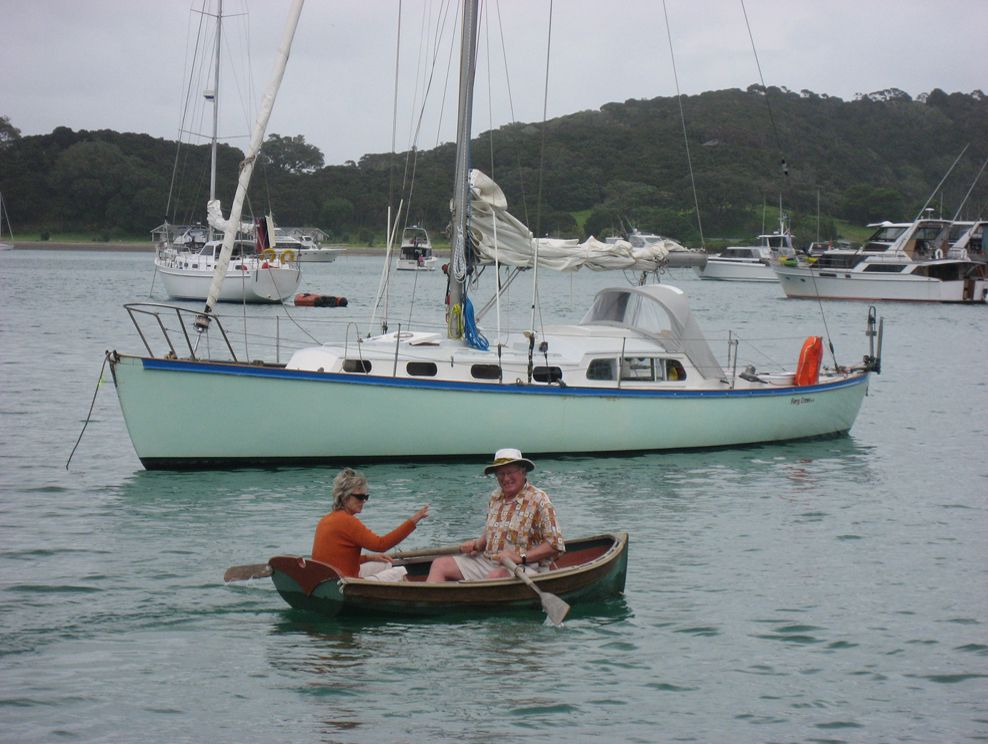
Fiery Cross with owners, Garry and Beryl Underwood. She was the first New Zealand keelboat to feature a swing keel (inspired by L. Francis Herreshoff) for greater sail-carrying power and speed.

Photograph by and courtesy of Michel and Jane De Ridder

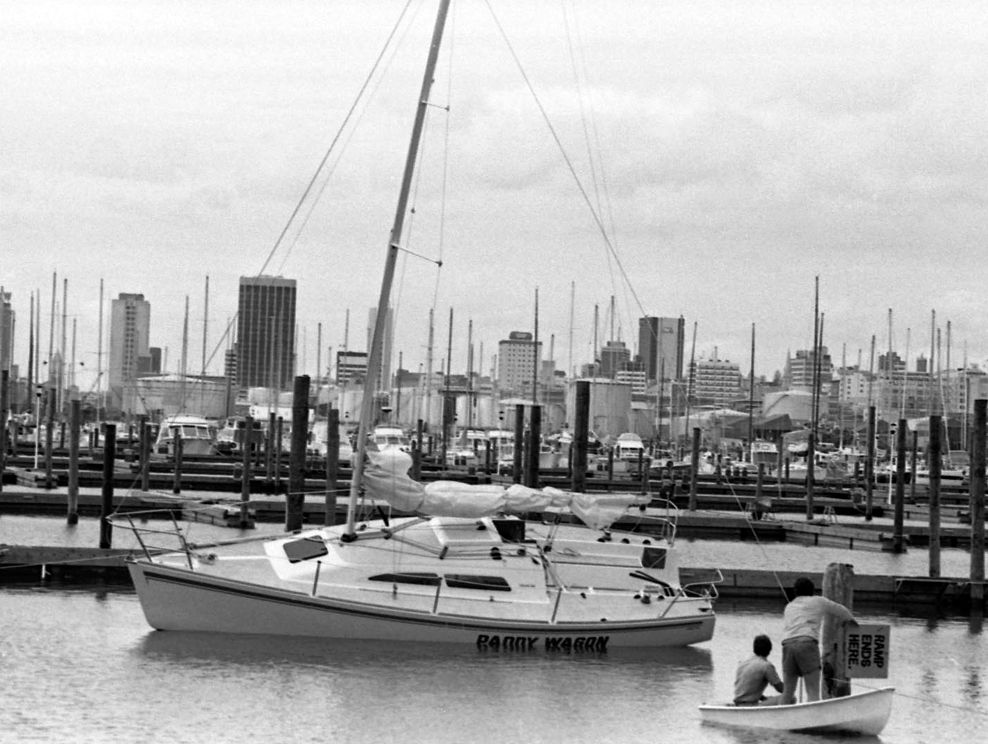
Paddy Wagon was the first Young 88 in the water – seen here during her righting test. The Young 88 proved to be a popular and successful racer–cruiser, with some 180 built.

Photographer unknown, Sea Spray Collection, New Zealand Maritime Museum Hui Te Ananui a Tangaroa

JIM YOUNG

(1925–2020)

Jim Young’s pioneering use of new technologies profoundly influenced yacht design and construction here and abroad.


Schooling in yachts

Wellington-born Jim Young grew up in Auckland and started sailing at primary school.

In 1940, aged 15, he began a boatbuilding apprenticeship with Shipbuilders Ltd. He continued it in 1941 with Roy Lidgard. At night school, he learned basic yacht design from Jack Brooke and Alex Collings, son of Charles Collings. He built dinghies in his spare time, starting off with a Z Class.

JIM YOUNG

Early boats

Young joined the armed services after World War II and was stationed in Japan. There, he built what could possibly be called ‘Japan’s first yacht’, using army tents for sails. Such ingenuity would mark his career.

Back home, Young partnered with Jack Taylor to build small boats. His X Class White Heather, with Young as skipper, won the 1949 Sanders Cup, the then yachting event of the year.

In 1950, he began his own business, Jim Young Yachts Ltd, in Birkenhead. His first commission was a Bill Couldrey design, the 30-foot (9.14m) launch Cleone. Couldrey was a major influence, as was American designer L. Francis Herreshoff.

JIM YOUNG

Revolutionary

Young introduced numerous innovations over the next 30 years. The following are a small selection.

He was the first New Zealander to design and build a glued laminated keelboat – Fiery Cross (1953–58) – in which he also used the first swing (canting) keel.

He played a significant part in introducing multihulls, designing the controversial racing catamaran Kitty in 1958 and a cruising cat in 1959.

His Vindex design (1970) was the first to make production cruising launches in fibreglass. His Rocket 31 and Young 88 designs (both 1980) were the first to use strip timber-core fibreglass construction in sailing boats.

He developed a water ballast system for trailer yachts (1979) and the use of disposable water ballast for stability in deep-Vee power boats.

Image 3_Jim Young EXTREME.jpg

Jim Young developed Extreme from his Rocket 31 design, specifically for the Coastal Classic Yacht Race. Extreme took line honours in Division 4 in 1993 and for several years after.

Photographer unknown, Sea Spray Collection, New Zealand Maritime Museum Hui Te Ananui a Tangaroa

JIM YOUNG

Sailing on paper

Young retired officially in 1995, but a stream of designs from his fertile mind continued. ‘Most just sail across the drawing board these days,’ he told Boating New Zealand in an interview in 2009.

However, Young’s innovations have profoundly influenced the yachting world, including a number of well-known contemporary designers, some of whom were employed by him. His boats have provided sailing pleasure for thousands. In 2012 he was awarded the ONZM for services to boat building. The award recognised Young's contributions to yacht and boat design in New Zealand.

gg-tue-1-may-2012-10-morning-investitures-government-house-wellington-james-jim-young-investitureghw010512am-8.jpg

Jim Young and then Governor-General Sir Jerry Mateparae, investiture ceremony, 2012.

Photograph courtesy of New Zealand Government, Office of the Governor-General