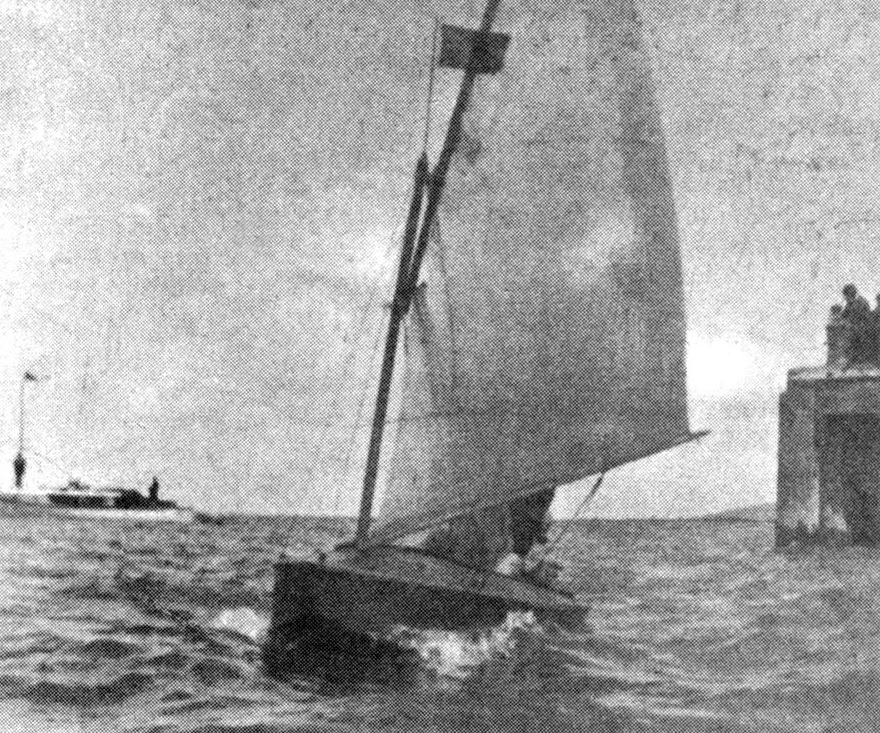
Harry Highet’s prototype 7-footer at Onerahi Regatta, Whangarei, on New Year’s Day, 1920.

Photographer unknown, courtesy of Harold Kidd / Portrait: Photographer unknown, Sea Spray Collection, New Zealand Maritime Museum Hui Te Ananui a Tangaroa

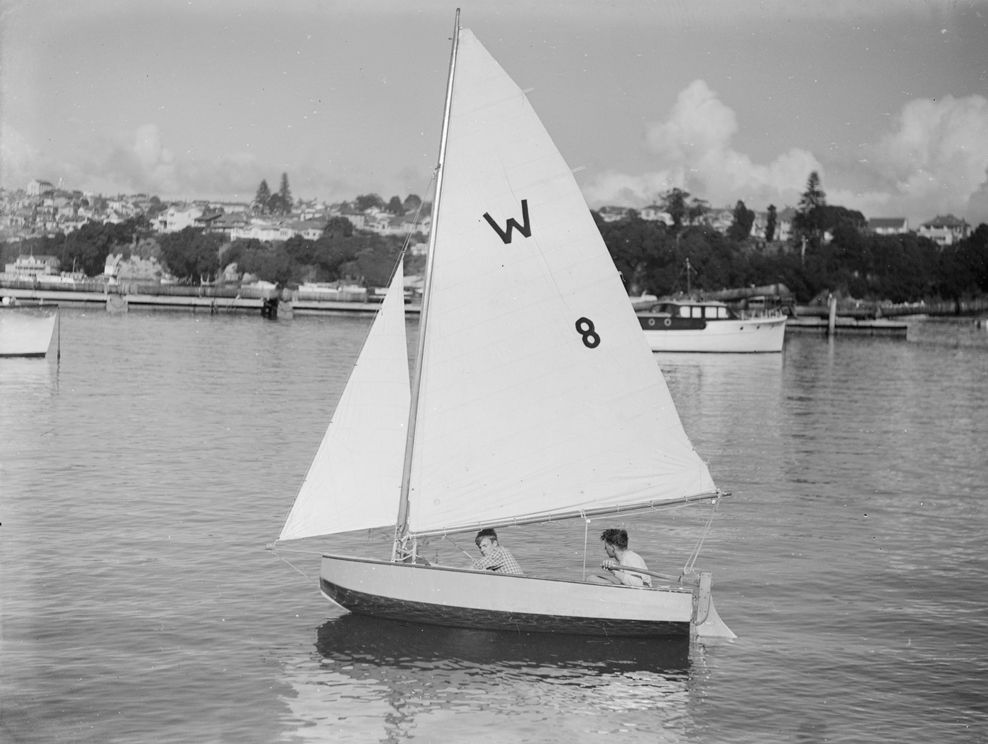
Goldwyn is an example of a Wanganui Class yacht. Harry Highet designed this on commission from the Wanganui Sailing Club in 1930.

Photographer unknown, reproduced courtesy of Auckland Museum Tamaki Paenga Hira, Marine Photos Collection (C38975)

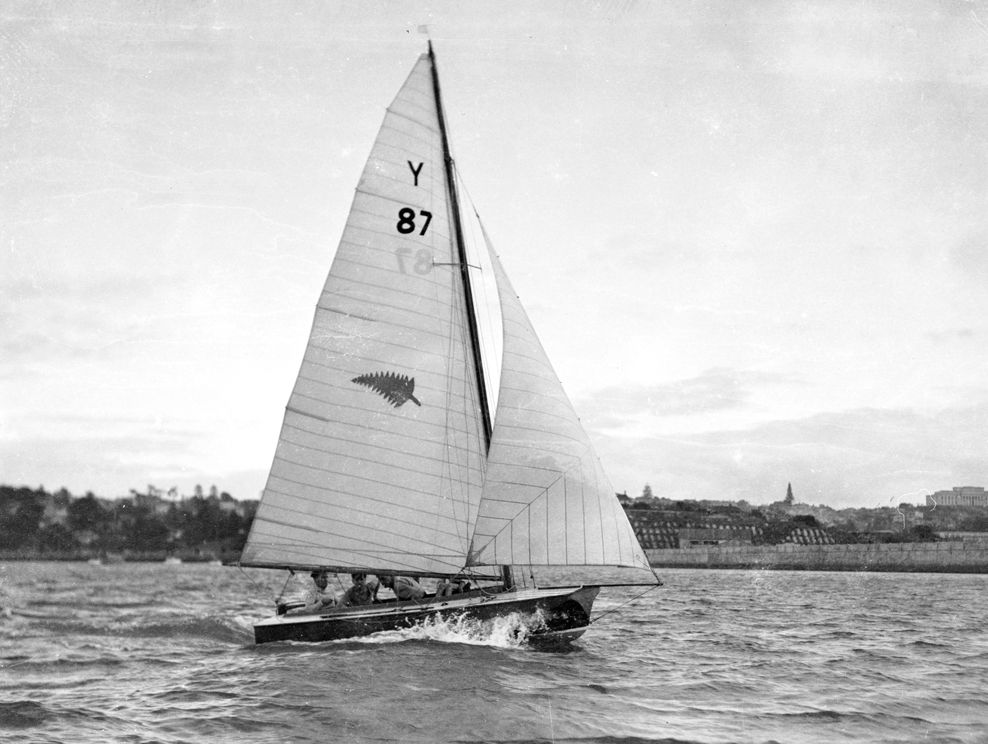
Impudence was the first of Harry Highet’s unconventional 14-footers, dubbed ‘aircraft carriers’. He built the boat in 1934 with his nephew Clive Highet, who designed the sails and rigging. This successful yacht needed to be sailed more like a catamaran than a monohull.

Photograph by Max Frommherz, reproduced courtesy of Auckland Museum Tamaki Paenga Hira, Marine Photos Collection (C44686)

HARRY HIGHET

(1892–1989)

Harry Highet was the man behind the Tauranga or P Class – one of the most influential boats in New Zealand yachting history.


Growing up in Wellington

Harry Highet grew up in Wellington. The Highet children built boats out of whatever materials they could scrounge and learned early to cope with Wellington’s boisterous sailing conditions. Their father worked in the shipbuilding industry.

Highet designed his first boat – a 14-footer (4.27m) – at about the age of 14. He continued as an amateur designer throughout his life. He became a civil engineer by profession.

HARRY HIGHET

P Class prototype

Highet moved with his family to work in Whangarei after World War I. Short of money, he built a 7-footer (2.13m), just so he could get afloat, but soon saw its potential for young novice sailors.

This 7-footer prototype would be a turning point in New Zealand yachting history. Initially, people thought that children crewing a craft on their own was an aberration. Only when Highet moved to Tauranga did the boat’s popularity surge, first becoming known as the Tauranga Class.

The tiny trainer got youngsters on the water at minimal cost. For decades the P Class, as it became universally known, was the ‘nursery’ craft for many top sailors.

HARRY HIGHET

Other contributions

In 1929, Highet returned to his favourite size of yacht, the 14-footer, building Putorino. With this boat, he refined his ideas on the ‘planing hull’, reducing resistance and increasing balance. His later 14-footers took these ideas to extremes and were dubbed ‘aircraft carriers’ for their broad and flat looks.

In 1930, Highet was commissioned by the Wanganui Sailing Club to produce a one-design class. His 10.5-foot (3.2m) Wanganui Class was popular for a time but could not compete with national classes of centreboarders. There was a brief revival in Auckland after 1950.

In 1963, Highet was the first recipient of New Zealand’s Sailor of the Year Award (Sir Bernard Fergusson Trophy).


ON DISPLAY

See P Class yachts Jan (the original Highet design) and Heavy Metal (a 1990s version) in the Gallery of Yachts.