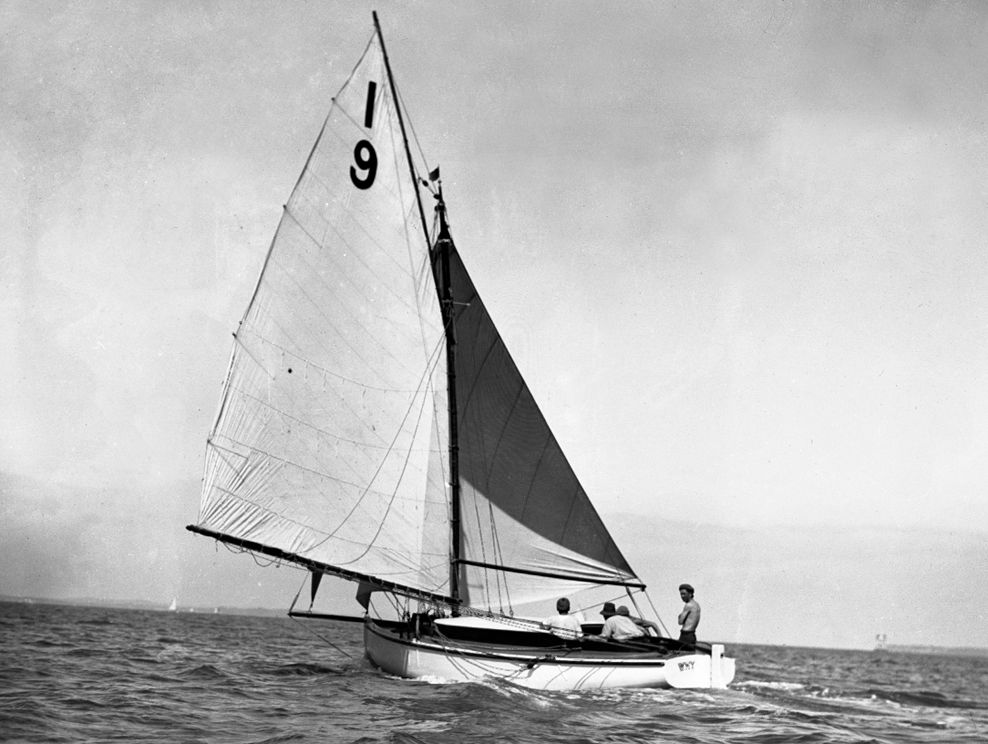
The 24-foot (7.32m) Why Not, designed and built by Clare and Collings as a racing mullet boat for William Tupp in 1905.

Photograph by William Fletcher, New Zealand Maritime Museum Hui Te Ananui a Tangaroa (1999.12.1) / Portrait: Photographer unknown, Alexander Turnbull Library (B-K153-911)

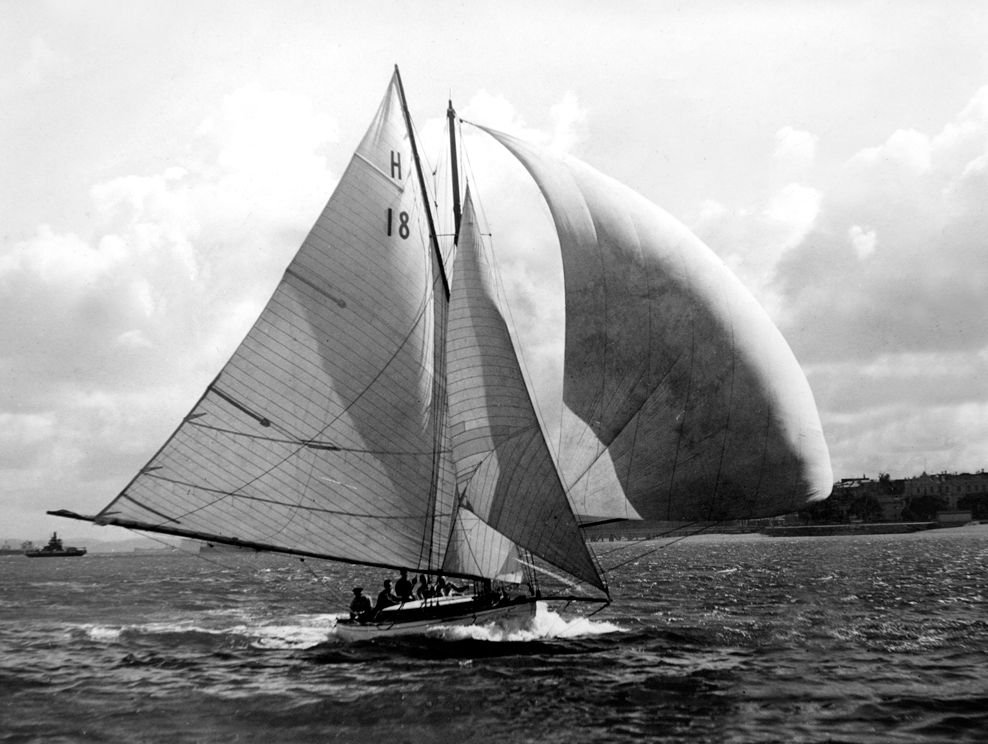
Corona (1936) was among Charles Collings’s most successful mullet boats. He built this 26-foot (7.92m) H Class racer for Ron and Gordon Nunns.

Photograph by Marine Photos, Auckland, New Zealand Maritime Museum Hui Te Ananui a Tangaroa (9999.60)

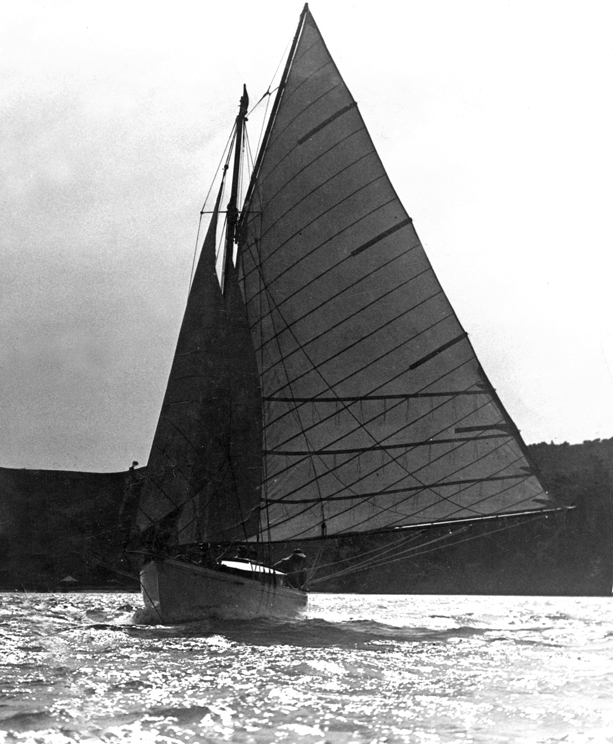
Minerva on her first cruise, c.1936. Minerva was a small keeler designed by Charles Collings and built by Collings & Bell for Bunty Palmer in 1936.

Photograph by Charles Collings, New Zealand Maritime Museum Hui Te Ananui a Tangaroa (1994.334)

CHARLES COLLINGS

(1870–1946)

Charles Collings was once considered New Zealand’s best all-round designer, famous for his racing mullet boats and powerboats.


Golden beginning

Charles Collings completed a civil-engineering apprenticeship before working with legendary Auckland boatbuilder Robert Logan Sr.

In 1894, he moved to the Coromandel goldfields as a design engineer and builder. Back in Auckland in 1902, he joined James Clare’s yard. When Clare died later that year he continued in business with two of Clare’s sons but took it over in 1905 as Clare and Collings.

The business later became Collings & Martin, then Collings & Bell.

CHARLES COLLINGS

‘Father of the mullet boat’

Collings developed a reputation as the ‘father of the mullet boat’. These yachts evolved from utilitarian fishing boats into thrilling racers. Collings prompted a design ‘leap’ with his 1903 designs Emerald and Okere.

One of his most famous ‘mulleties’ was Tamariki (1934), an L Class that he designed and built for himself. This had two design innovations – a hollow mast and a cabin top that could be removed for racing. Tamariki won the Lipton Cup 12 times. The advances of his commissioned H Class Corona (1936) led her to being described as ‘the ultimate mullet boat’.

His L Class Taotane (1939) was so successful that 40 years later a mould was taken off her hull and several clones were produced in fibreglass.

CHARLES COLLINGS

More power

Collings was involved in power boat design from his earliest period and was a pioneer in planing hulls prior to World War I. He tried out many of his ideas in a test tank behind the Collings & Bell shed in St Marys Bay, Auckland.

During World War I, the German naval commander Count Felix von Luckner escaped from his Motuihe Island prison in the Hauraki Gulf in the Collings-designed launch Pearl.

Concave-convex hulls

Collings produced many well-known motor launches and high-speed racing boats and was renowned for his ‘concave-convex’ hull forms.

His series of successful outboard racers included Fleetwing Junior (1925), claimed to be the first boat designed and built in New Zealand to exceed 60 miles per hour (100kph).