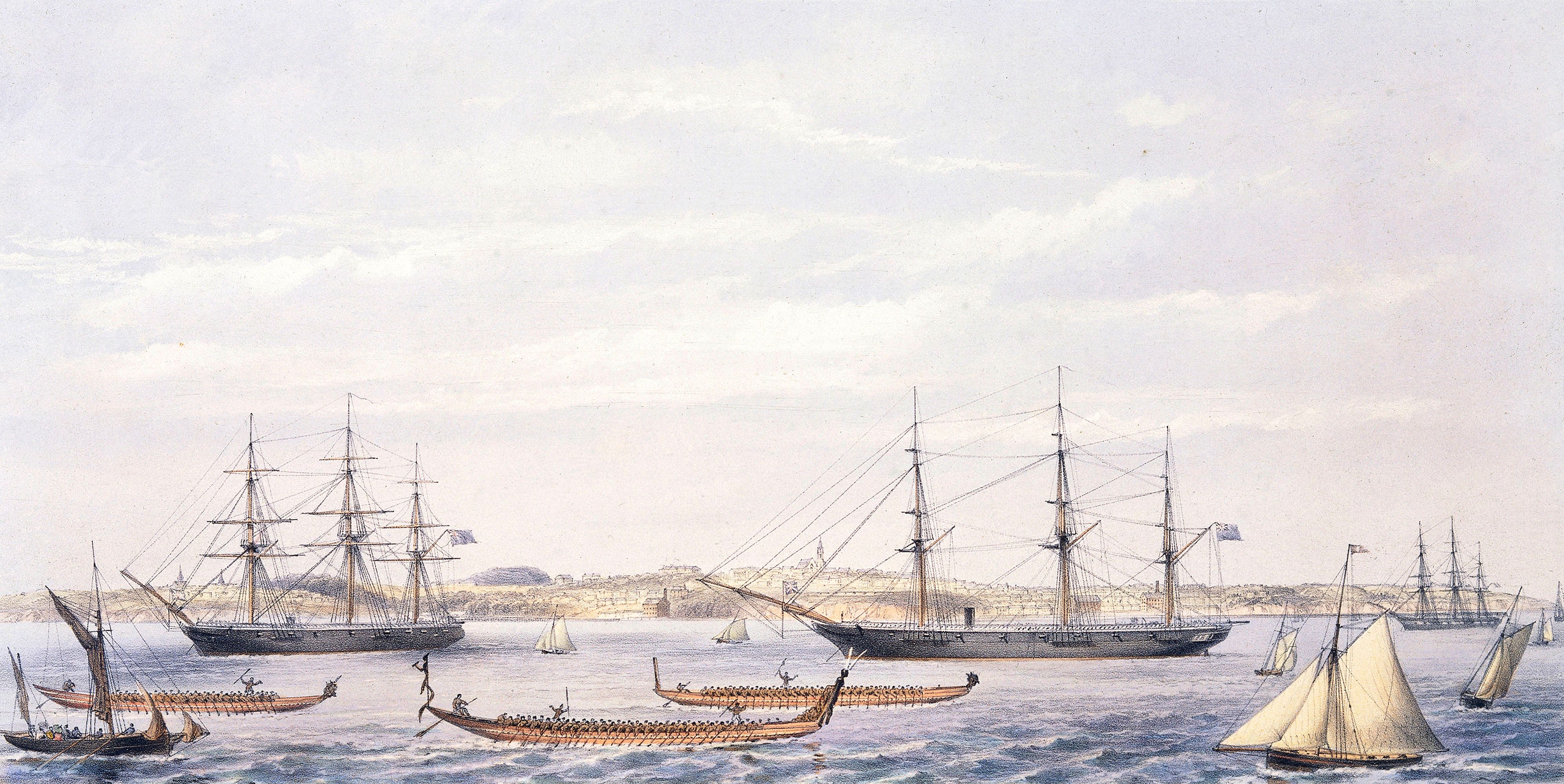
Waka racing during the Auckland Anniversary Regatta, January, 1862.

Lithograph of a drawing by F. R. Stack, reproduced courtesy of Alexander Turnbull Library (C-060-014)

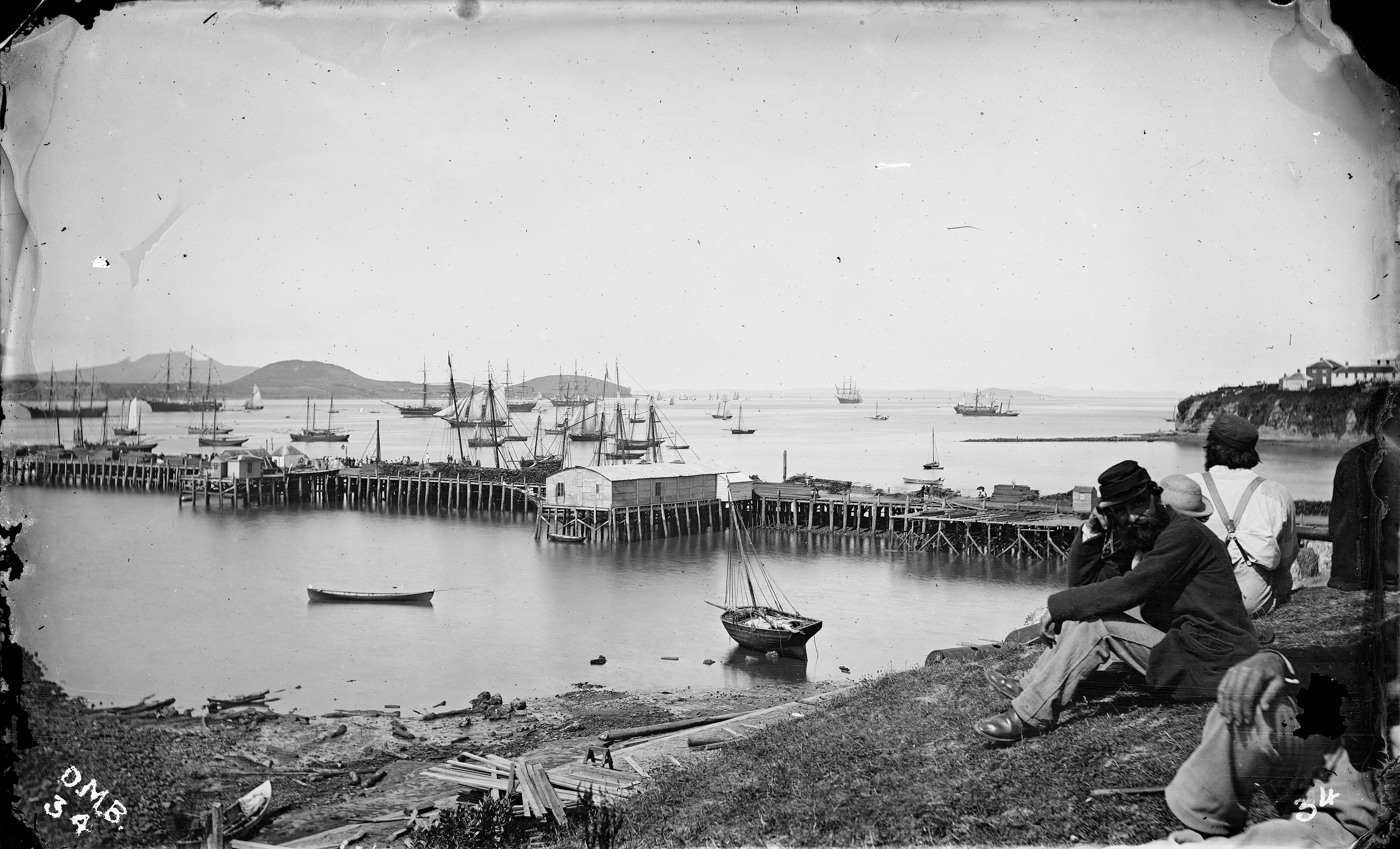
View of Queen’s Wharf from Smale's Point during the Auckland Anniversary Regatta, 1864.

Photograph by Daniel Manders Beere, Alexander Turnbull Library (G-96102-1/2)

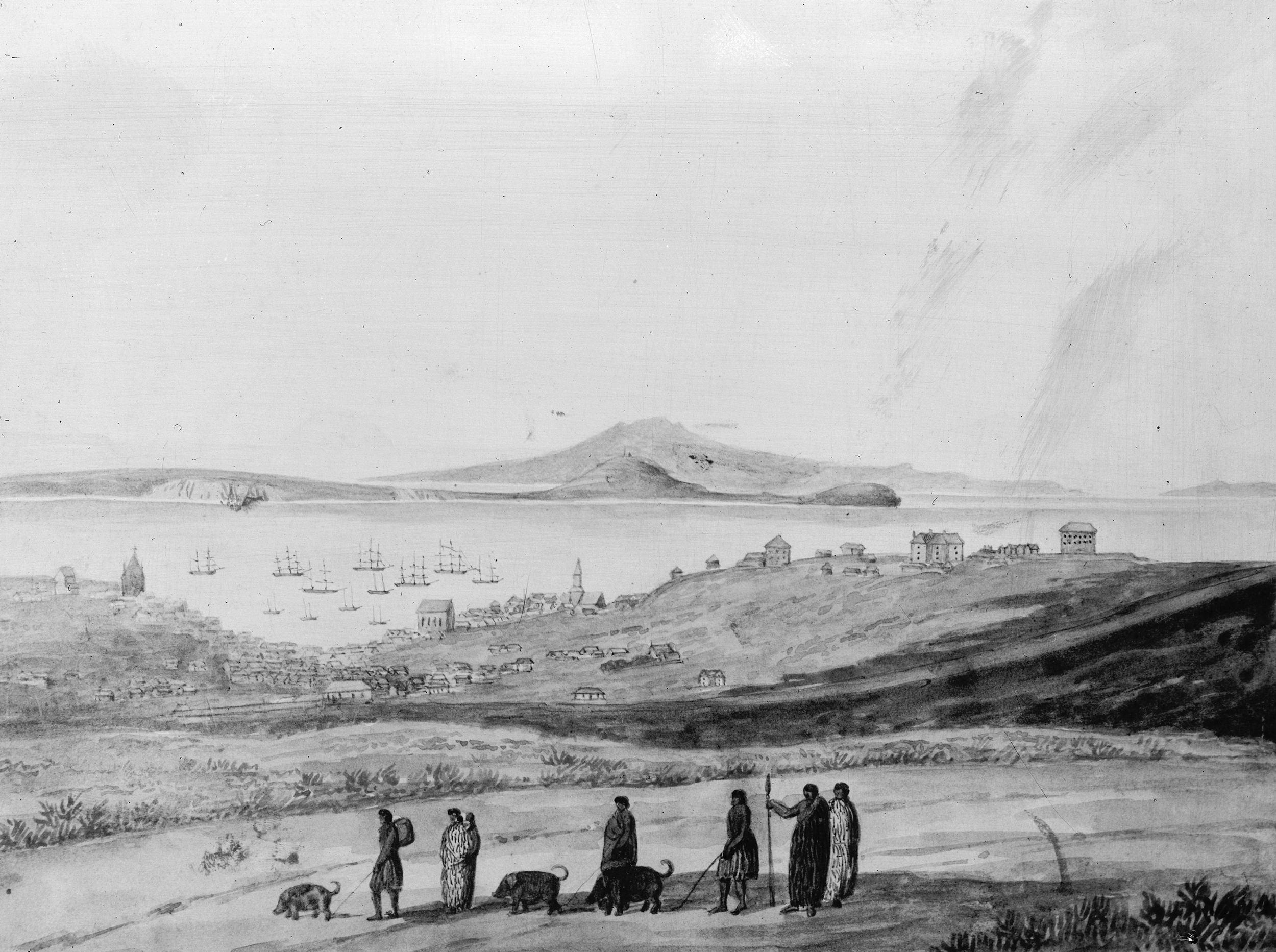
Until the 1860s, Māori controlled a high proportion of Auckland trade and had their own trading fleet. Without their involvement, early Aucklanders would have struggled for food.

James D. Richardson, about 1849, Auckland Libraries Heritage Collections (4-4549)

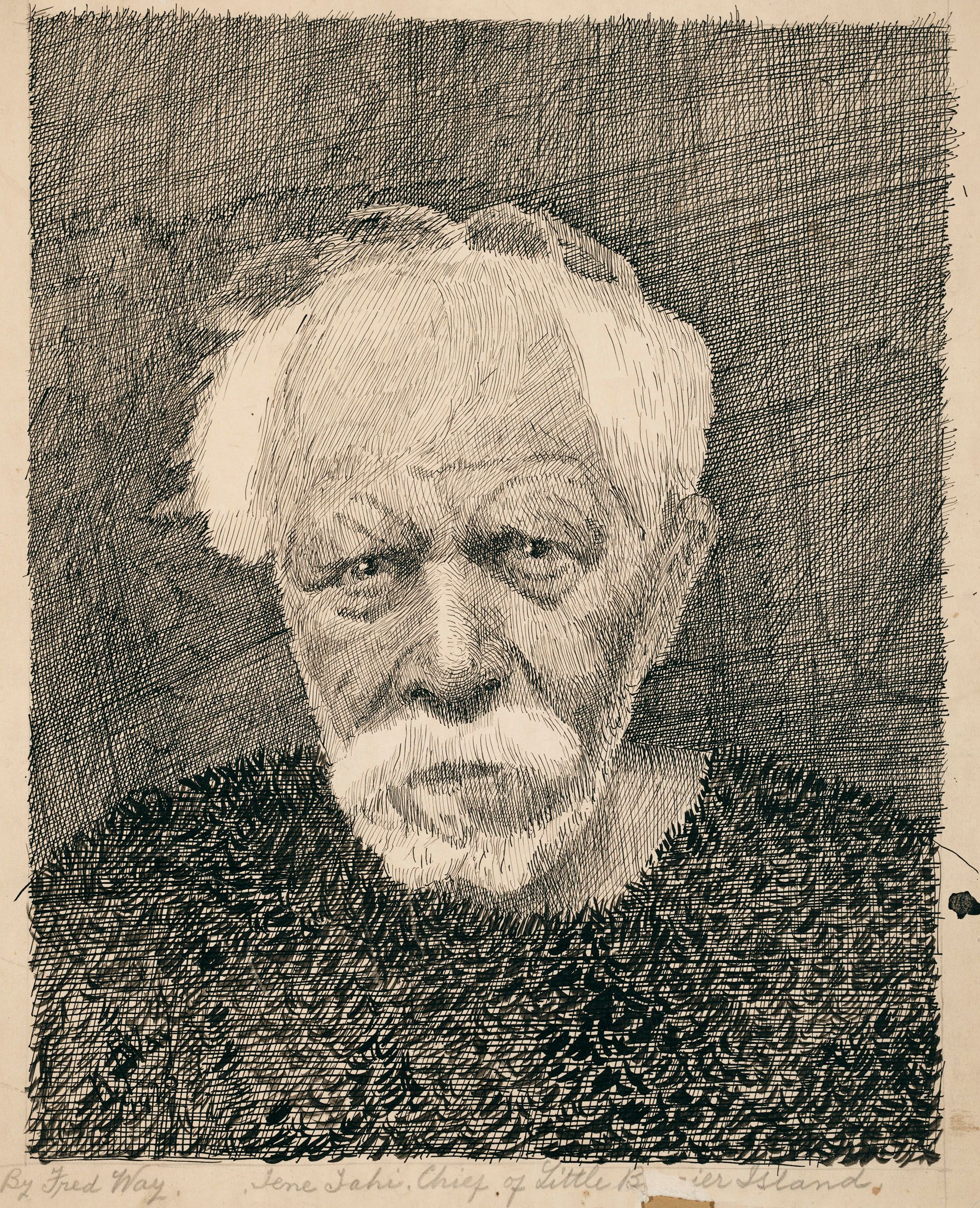
A portrait of shipowner Tenetahi, Chief of Little Barrier Island and owner of Rangatira and New Zealand Herald article about of Rangatira’s construction, 6 November 1876.

Drawing by Robert F Way, Alexander Turnbull Library (A-114-010) / Papers Past, NZME BY-NC-SA

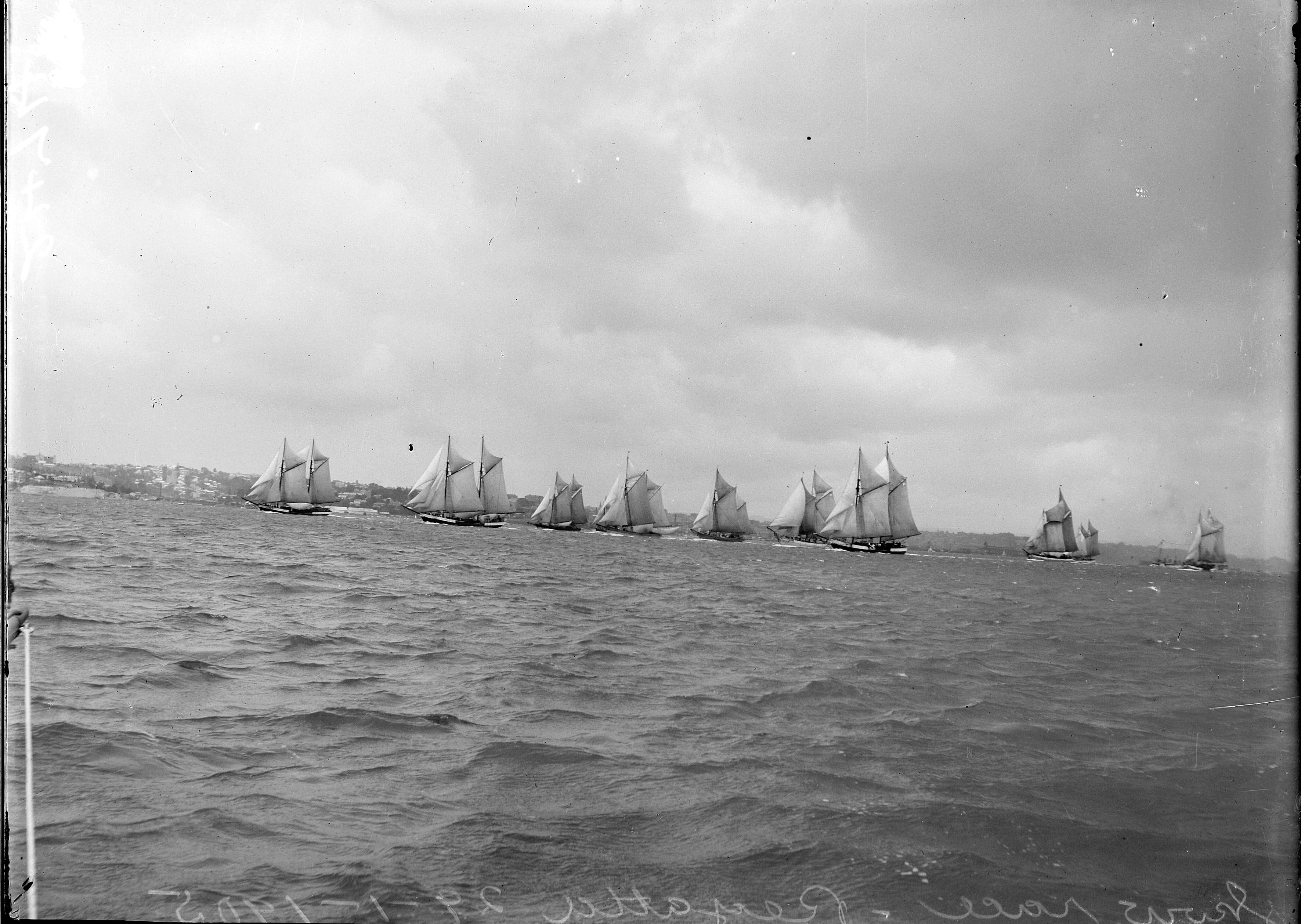
Scow race on Waitematā Harbour, showing (from left) Gannet, Seagull, Kahu, Vesper, Will Watch, Zior, Reliance, Havoc, Auckland Anniversary Regatta, 1905.

Photograph by James D. Richardson, Auckland City Libraries Special Collections (4-2474)

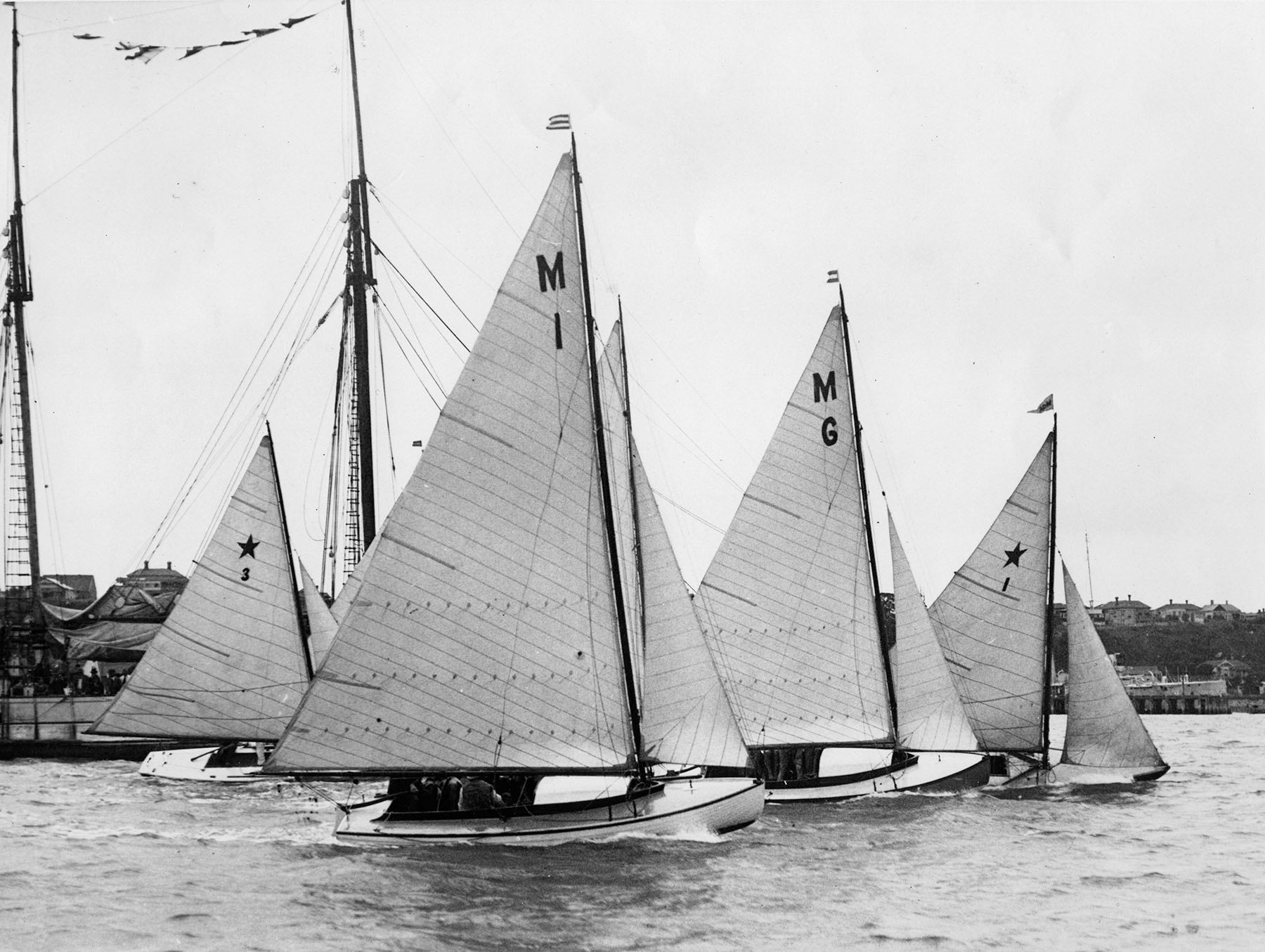
From the 1870s sailors established their own racing classes. Star Class and M Class yachts at Auckland Anniversary Regatta, 1927. From left: June (3), Mawhiti (M1), Mollie (M2) (obscured), Manene (M6), Moa (1).

Photographer unknown, 12297 New Zealand Maritime Museum Hui Te Ananui a Tangaroa, reproduced courtesy of New Zealand Herald

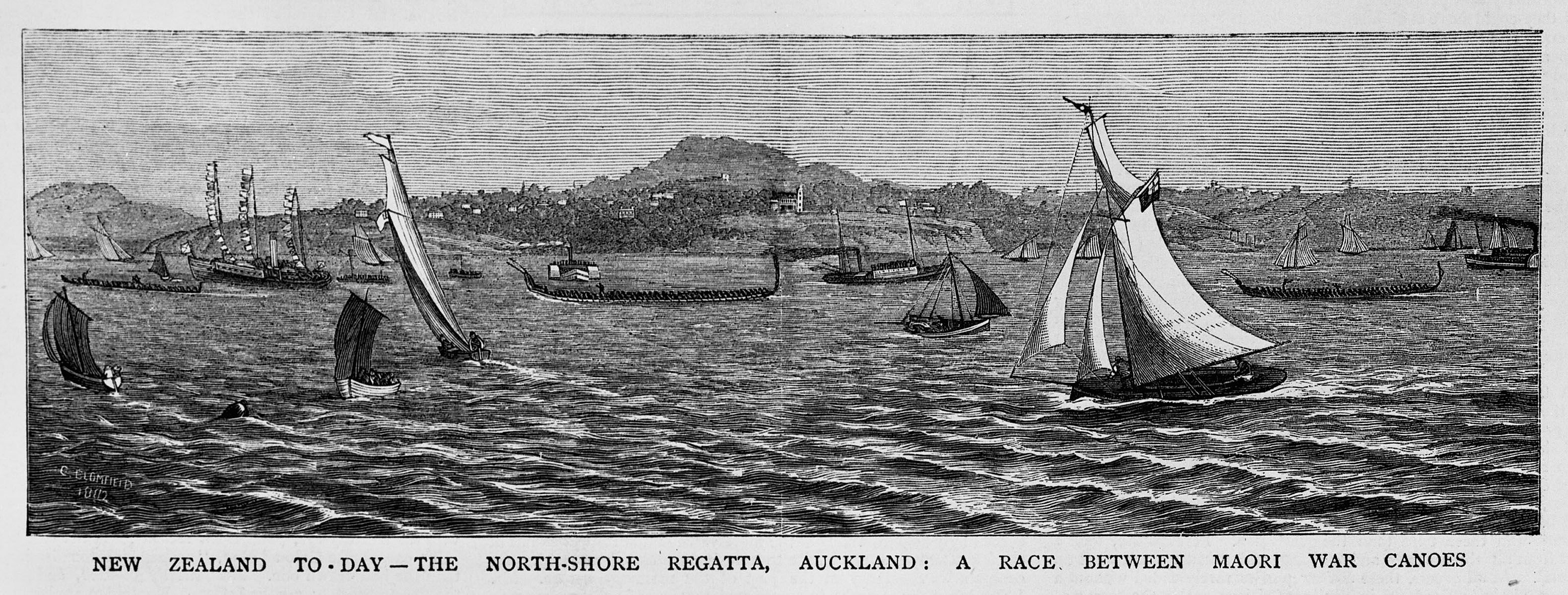
Māori waka race between sailing boats in the North Shore Regatta in 1883.

Charles Blomfield, Alexander Turnbull Library (A-110-004)

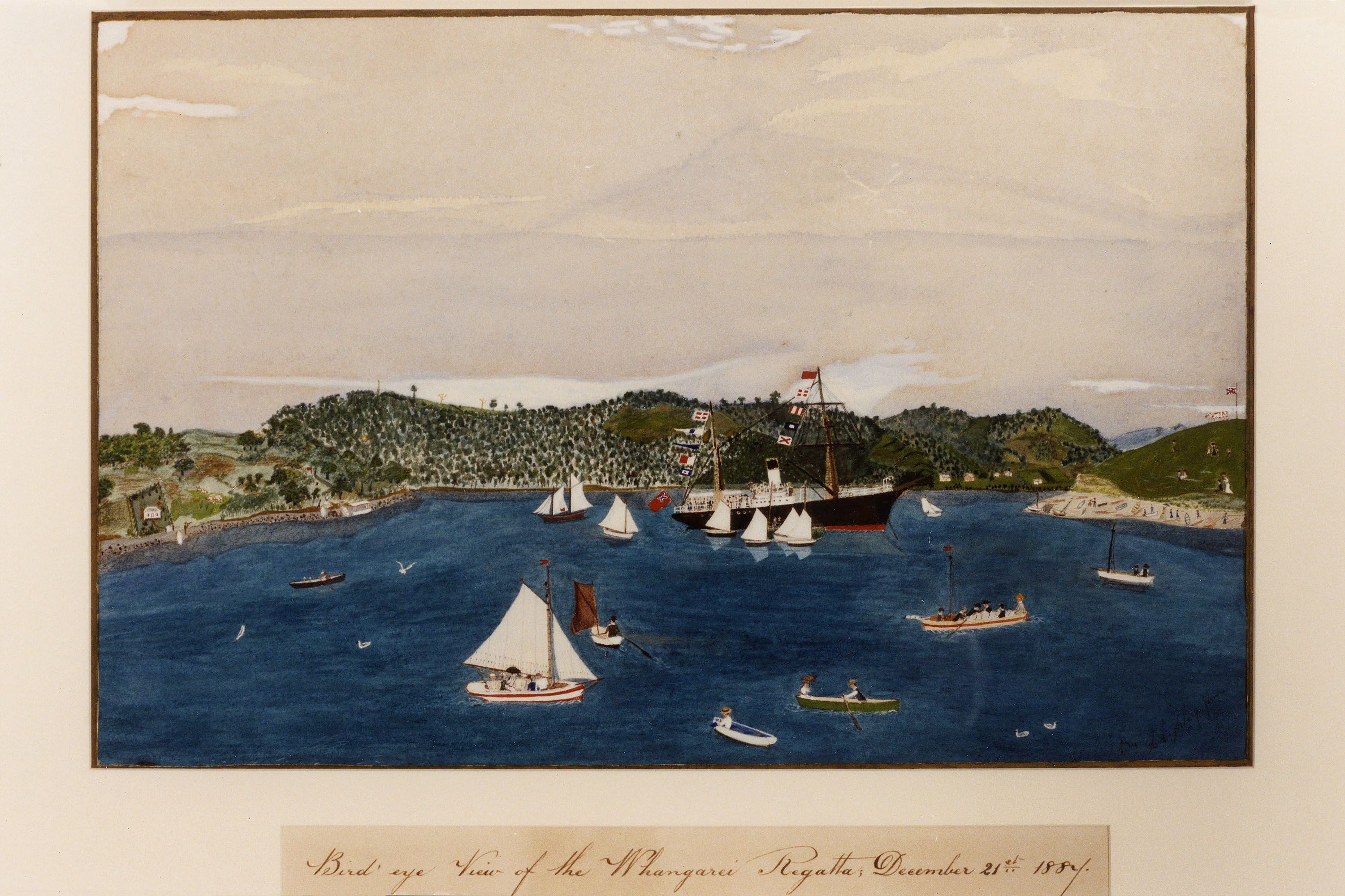
‘Bird eye view of the Whangarei Regatta, December 21st, 1887’, by R. Highly Jr, 1887

Copy of original painting, P. A. Edmiston Trust Collection / New Zealand Maritime Museum Hui Te Ananui a Tangaroa (L1992.219)

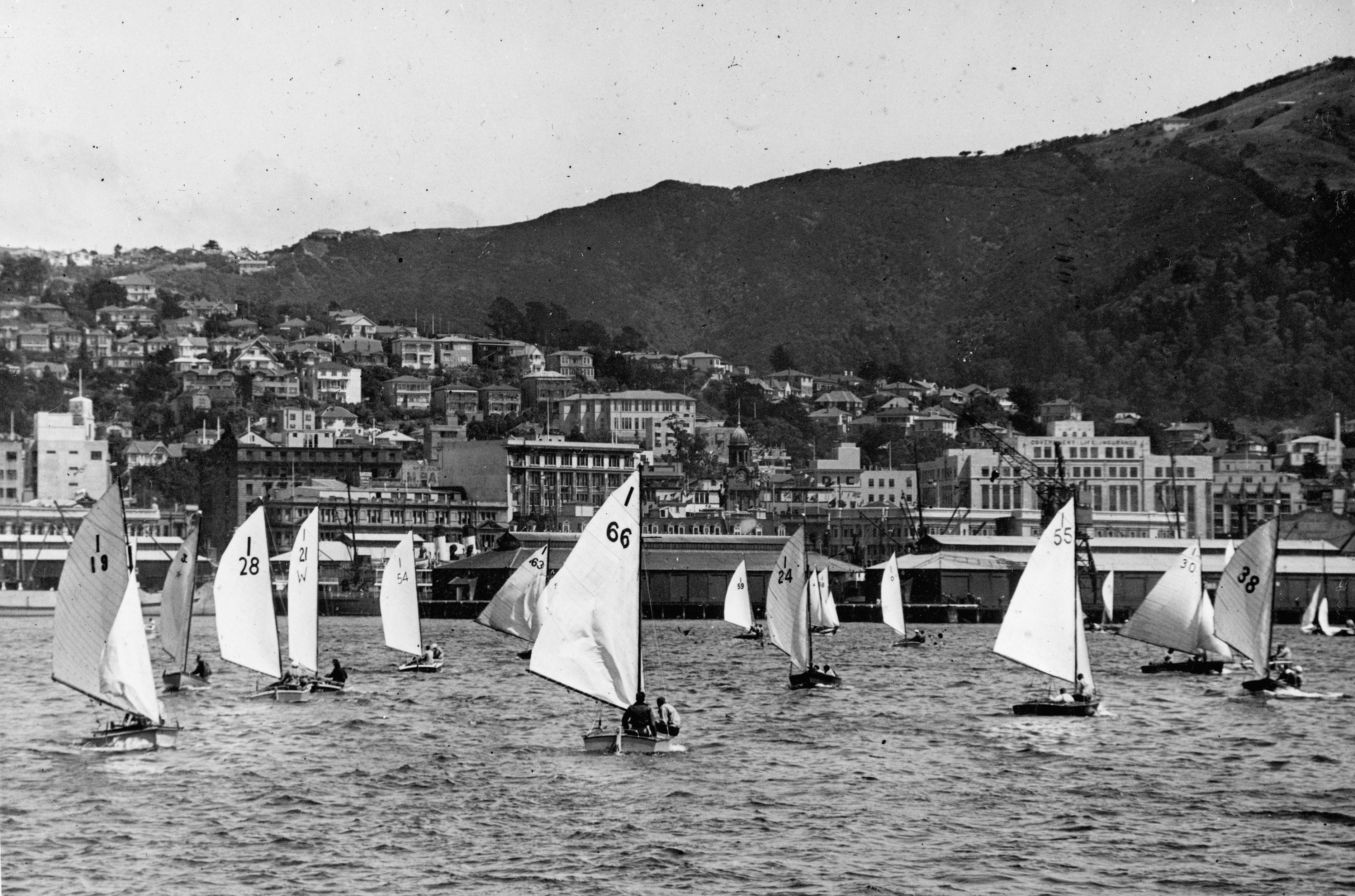
Wellington’s prolific Idle Along Class fleet mustered for the 1940 Centennial Regatta.

Photographer unknown, 6502 New Zealand Maritime Museum Hui Te Ananui a Tangaroa

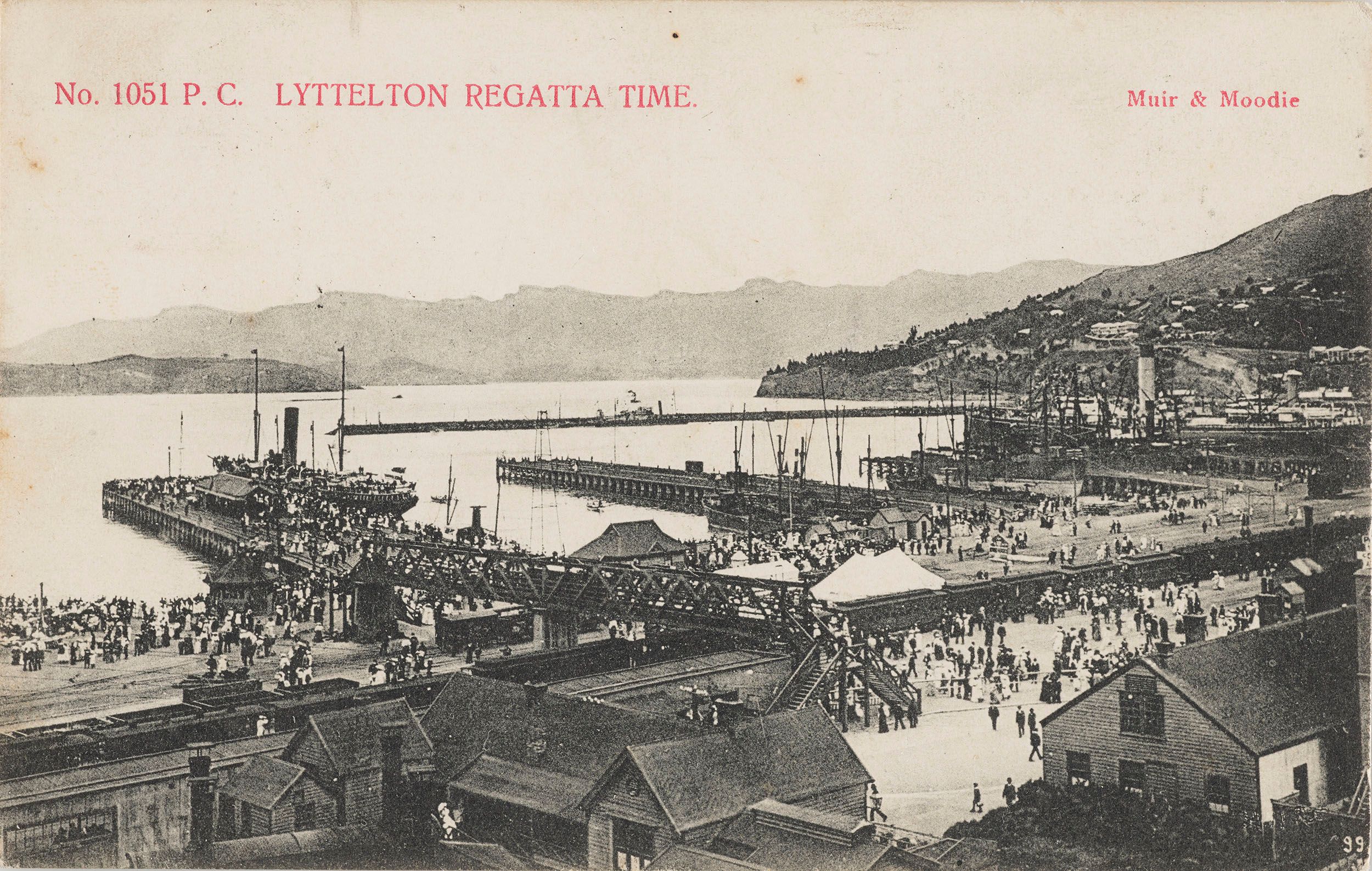
Lyttelton Regatta Time postcard, 1906.

Muir & Moodie studio, Museum of New Zealand Te Papa Tongarewa (PS.000937)

Early competitive sailing

Sailing was one of the earliest forms of sporting entertainment in New Zealand’s new port communities. By the 1860s, almost every port had a regatta of some sort with a keen spectator following.

Around this time, the annual Auckland regatta was populated by miscellaneous working boats – normally used for fishing, cargo, passenger transport, or trade – and waka and Māori-owned 'peach boats', used for trading food such as peaches and melons around the inner gulf.

Working boat races

Contests took place in regattas or in occasional match races – when two boats raced over an agreed course. Contestants were mostly the owners and crews of working boats.

The largest working boats were schooners and cutters used for coastal transport. Smaller ones were used for fishing or local commerce.

A large number of Auckland’s working boats in the 1840s and 1850s were owned and operated by Māori, who dominated local trade.

Sailing for 'purses'

In the early days, the chance to win substantial cash ‘purses’ from competitive sailing motivated many to take part. Races were also an opportunity for gambling, with plenty of organised bets on the outcomes.

Māori participation in early Auckland regattas

The mid-19th century is regarded as the golden age for Māori sailing craft. During this time Māori owned and ran about half of the ‘working boats’ and coastal trade into Auckland. Indeed, immigrant arrivals to the harbour would have noticed the strong presence of Māori, including farmers, whalers, gum diggers, loggers and the crews of canoes and Māori vessels.

The prosperity the colony enjoyed in the 1840s and early 1850s was due to Māori commercial enterprise. As the main source of fresh meat, seafood, vegetables and fruit (such as peaches and melons) for the growing city of Auckland, Māori vessels were sometimes referred to as ‘peach boats’.

Tenetahi and Rangatira

For many years, Māori canoe races were a regular feature of the annual regattas. But Māori-owned peach boats also competed, and many were hired by Pākehā for their racing capability. Rangatira was one competing cutter – owned and commanded by Captain Tenetahi (Ngāti Wai), she was a formidable opponent in her class. Rangatira enjoyed a number of famous wins at the Auckland Regatta during the late 1870s and early 1890s in the large (25 tons and up) trading cutter class. In 1883, Rangatira was wrecked at Great Barrier Island, making her class competitive once more for many other ships.

Article about Rangatira

Eviction

By the mid-1870s, the working boats of the early regattas were being replaced. Boat design was adapting – ‘open sailing boats’ (yachts) were the new boat of choice for regattas. At the same time, Māori trade and commerce with Auckland had fallen away. Confiscation of Māori land by the New Zealand colonial government and the increase in European population led to tension over the availability of land and resulted in war. Land confiscation also affected Captain Tenetahi, who was forced to turn his attention away from his affairs in order to challenge the 1894 Little Barrier Island Purchase Act. He contested the crown’s eviction of all Māori from Hauturu (Little Barrier Island) and continued to petition the government over the forced sale of ancestral land, but by the time of his death in 1923, aged 96, the exile was complete.

Yachts on the rise

From the 1840s, as New Zealand’s port communities became established, people began to own and sail boats for recreational racing and pleasure.

Craft used for this purpose generally became known as ‘yachts’. They ranged in size from decked vessels, with room for accommodation, to small, undecked ‘open’ sailing boats.

More money, more yachts

In the 1840s and 1850s, only a few wealthy individuals in New Zealand had yachts. But as more people found prosperity during the 1860s and 1870s, yachts were purchased in greater numbers. A cruising culture was developing, with people sailing in their local waters for recreation. However, many yachts were also bought with the intention of racing them.

More yachts, more racing

The increasing number of boats used for racing sparked a sporting industry. Regattas and special races attracted a big following from spectators and people wanting to gamble. Newspapers quoted the betting odds on boats – in port communities, yachting was as popular as horse racing.

Owners shipped vessels and crews to contests around the country. Like racehorse owners, they could make money from prizes and gambling.

Yachts push out working boats

Working boats continued to compete in regattas. But by the 1870s, there were enough yachts on the water for recreational sailors to form their own racing classes. Fishing boats with professional crews were given their own races. When yachts failed to make the grade in racing and an owner wanted to cut his losses, he could always sell off his yacht to work as a fishing boat!

Regattas for celebration

Initially, people in ports such as Auckland and Wellington organised regattas to celebrate the founding anniversary of their community.

As there were few boats used simply for leisure in the early days, most participants sailed or rowed working boats. Eager competitors would even persuade larger visiting ships make their longboats (or launches) available for racing.

From pig catching to schooner racing

These early regattas included events on land as well as water. On shore were running races and competitions like catching a greasy pig. On the water were races for waka and rowing boats as well as sailing contests. The main event would often be a race for schooners or other trading vessels.

The anniversary day regattas in Auckland, Wellington, Port Chalmers and Nelson became firm traditions. They marked the height of the sailing season and were popular days out – especially on occasions such as Queen's Birthday .

A regatta in every port

As time went on, every port in the country began holding regattas. Initially these were organised by committees set up specially to promote the event – for example, in Hokitika in December 1865 and Ponsonby in 1879.

Pursuing the prizes

From the 1870s, regattas came to be dominated by yachts built exclusively for racing. Working boats were gradually sidelined. Yacht owners would take their yachts around the provinces to race in regattas. They competed for prize money, a trophy and the prestige of owning the fastest yacht. For a while, yacht racing was as popular with punters as horse racing. Newspapers carried details of yachts’ winning form and the odds for betting on races.

The rise of club racing

As yacht and boating clubs came into being, they took over the organising of regattas and racing.

Nelson Yacht Club was the earliest such club, founded in 1857. By 1880, the Auckland Yacht Club, formed in the 1870s, was holding regular races.

Wellington anniversary racing

One of New Zealand’s oldest anniversary regattas was held in Wellington in January 1841. This annual fixture was organised by a committee of prominent citizens. The Port Nicholson Yacht Club was established in 1882, and shortly after, the club took over management of the regatta, which it still runs.

**More clubs, more racing **

By the 1890s, there were yacht clubs in Otago, Onehunga, Christchurch estuary, Lyttelton, and Invercargill. From 1900, the number of clubs increased rapidly, particularly in Auckland. Racing for members became a regular part of these clubs’ calendar of events.

New Year’s Day in Lyttelton

From the early 1870s until World War I, the annual Lyttelton Regatta on New Year’s Day was Canterbury’s most popular sporting event.

Trains from all parts of the province would bring people to the regatta. Crowds of up to 30,000 would gather around the waterfront to watch all types of working boats and yachts competing. From the 1860s until the turn of the 20th century, the trading vessel races were the main attraction, with large prizes and trophies awarded. Contestants would bring vessels from Akaroa, Dunedin, Auckland and Wellington to take part.

Demolishing the competition

There was plenty of excitement for spectators watching large vessels, like timber schooners, manoeuvring for advantage in Lyttelton Harbour’s narrow waters. Here are one person’s memories of a race from , viewed from his clifftop vantage point.

“I could see trouble in store, as Peerless was boring her smaller rivals in so close to the rocks that, when Saucy Lass had to heave round to avoid going ashore, Alert rammed her jibboom into her mainsail, splitting it from top to bottom, and at the same time carrying away her own jibboom and bowsprit.

“To make matters worse, Peerless came crashing into both vessels, carrying away her jibboom and bringing down her fore topmast and yards.

“What a fine bird’s-eye view of this exciting incident I had, just at my feet, as it were! And what shouting and cursing, combined with the slatting and ripping of canvas, with the noise of splintering woodwork and falling spars!”

Alex Watson in Sea Spray magazine, 1 December 1947